How to Update Your Home Without Starting Over
When homeowners decide their interiors need an update, there’s often an assumption that everything has to go. New furniture. New cabinetry. New finishes. A completely new look.
But some of our favorite interior design projects begin with the opposite question: What is already here that deserves to stay?
That was very much the case with our Layers of Character project, a unique Cincinnati home created by combining two condominium units into one residence. The clients had already collected beautiful antique furniture, richly colored rugs and pieces that held meaning for them. They didn’t want a home that suddenly looked brand new. They wanted their home to work better, feel more cohesive and reflect their personalities while preserving the character they had spent years creating.
The result is a good example of something we tell our clients often: A successful home update doesn’t necessarily mean starting over. Sometimes good interior design is knowing what to keep, what to change and what to add.
Start With the Pieces You Already Love
One of the first things we consider when updating an existing home is what deserves to remain.
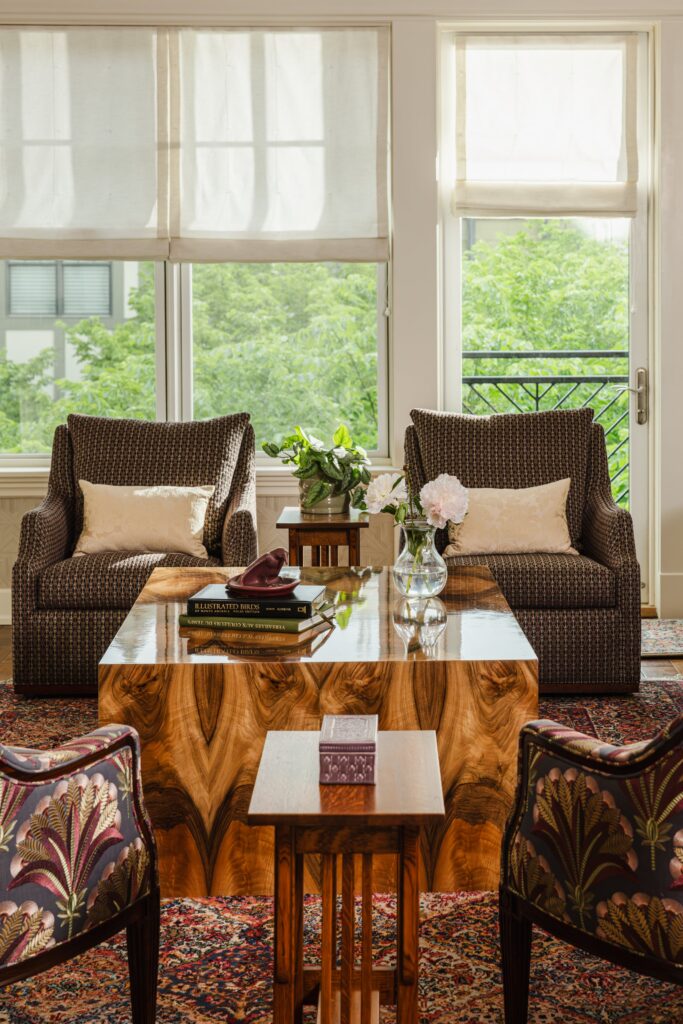
In this case, the clients owned a wonderful collection of antique and wood furniture. Rather than designing around those pieces reluctantly, we treated them as part of the character of the home. Some existing furniture remained as-is, while other pieces were reupholstered and given new life. New upholstered furniture and case goods were then introduced where the rooms needed additional comfort, function or balance.
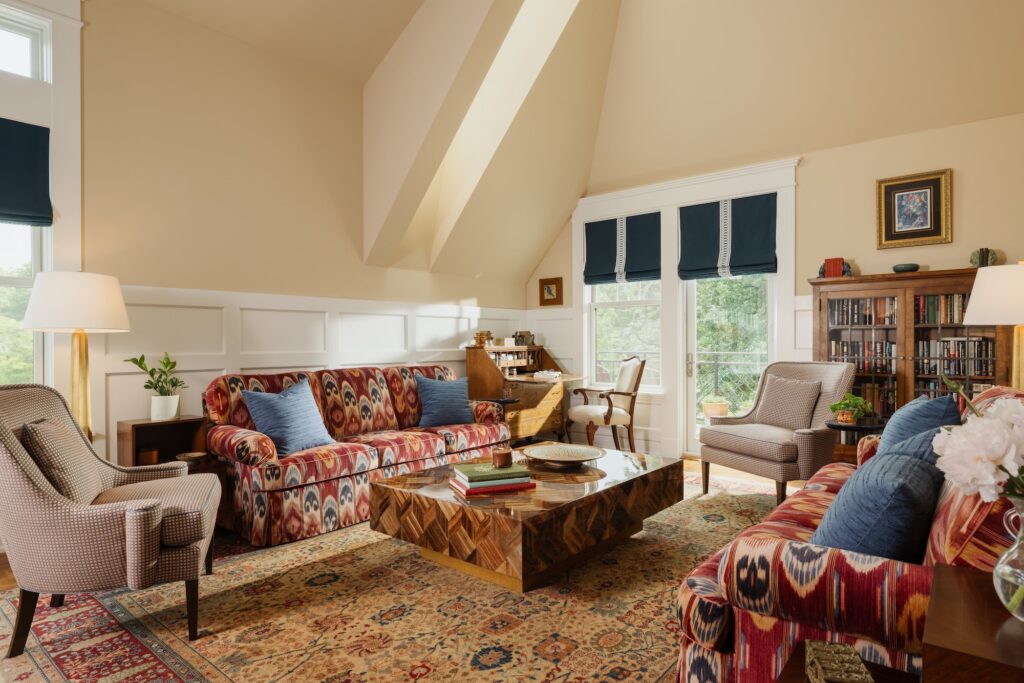
The key is that keeping existing furniture doesn’t mean everything else needs to match it.
Because there were already so many beautiful wood tones throughout the home, adding even more wood could have made the rooms feel visually heavy. Instead, we layered in contrasting materials like stone, metal, lacquer and soft textiles.
This is where a home begins to feel collected rather than coordinated.
How Do You Mix Antiques With New Furniture?
The goal isn’t to make the new pieces look old or the old pieces look new. It’s to create enough visual connection that they feel like they belong together.
Color, proportion, material, upholstery, and placement can bridge the gap between different periods and styles. A contemporary upholstered piece can sit beautifully beside an antique table when the scale and materials are right.
In fact, incorporating older pieces often gives a newly designed room something that can’t simply be purchased: history.
For homeowners who have spent years collecting furniture, artwork or rugs they love, a redesign shouldn’t erase that history. It should make those pieces feel even more intentional.
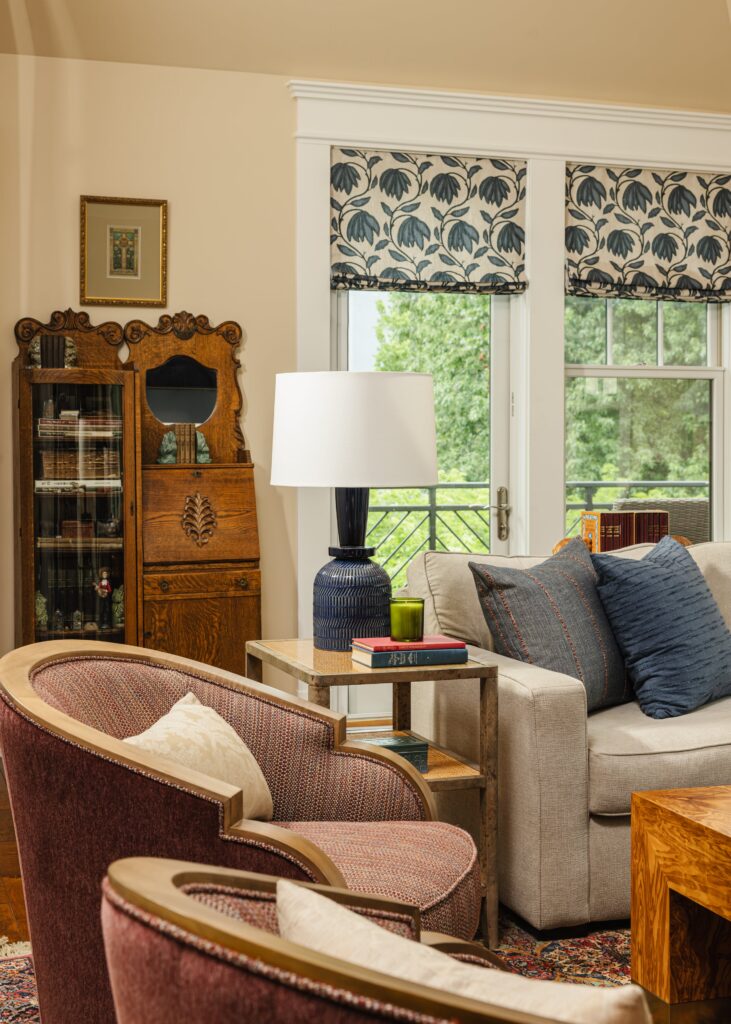
Sometimes the Floor Plan Is the Biggest Transformation
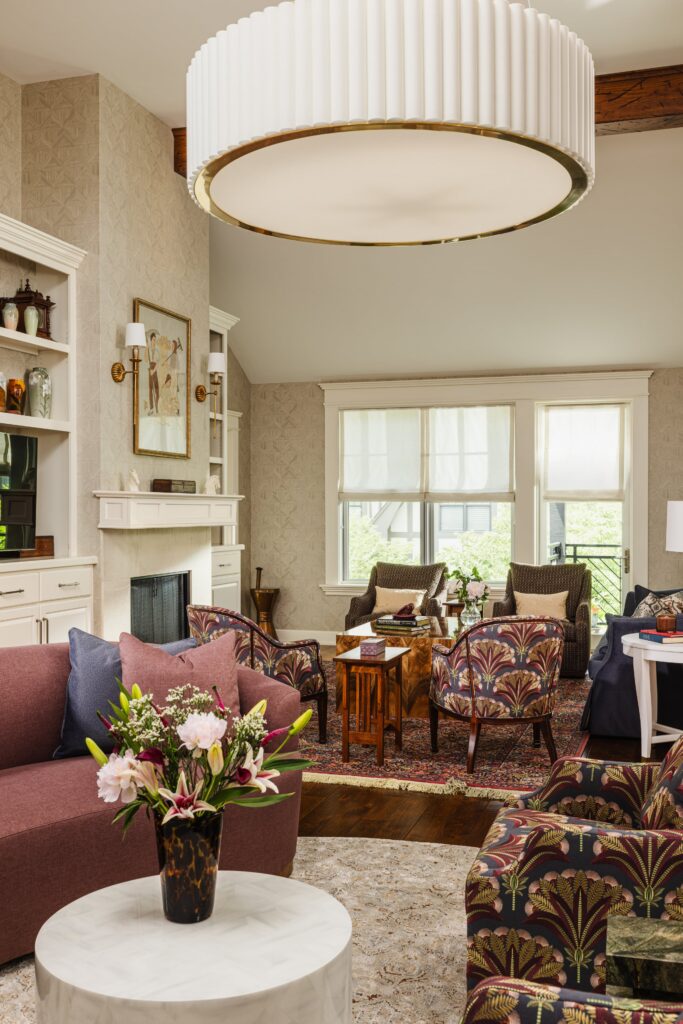
These clients love to entertain, so furniture placement wasn’t simply an aesthetic decision. Traffic flow and conversation were major considerations throughout the design.
The combined condominiums created large, connected living spaces, but bigger doesn’t automatically mean better. Furniture has to give people natural places to gather while still allowing them to move comfortably between rooms.
We developed arrangements that created intimate conversational areas within the larger spaces while maintaining an intuitive flow for parties and larger gatherings.
That’s why we spend so much time on space planning before selecting furniture. A beautiful sofa in the wrong location is still the wrong sofa.
Working With Challenging Architecture Instead of Against It
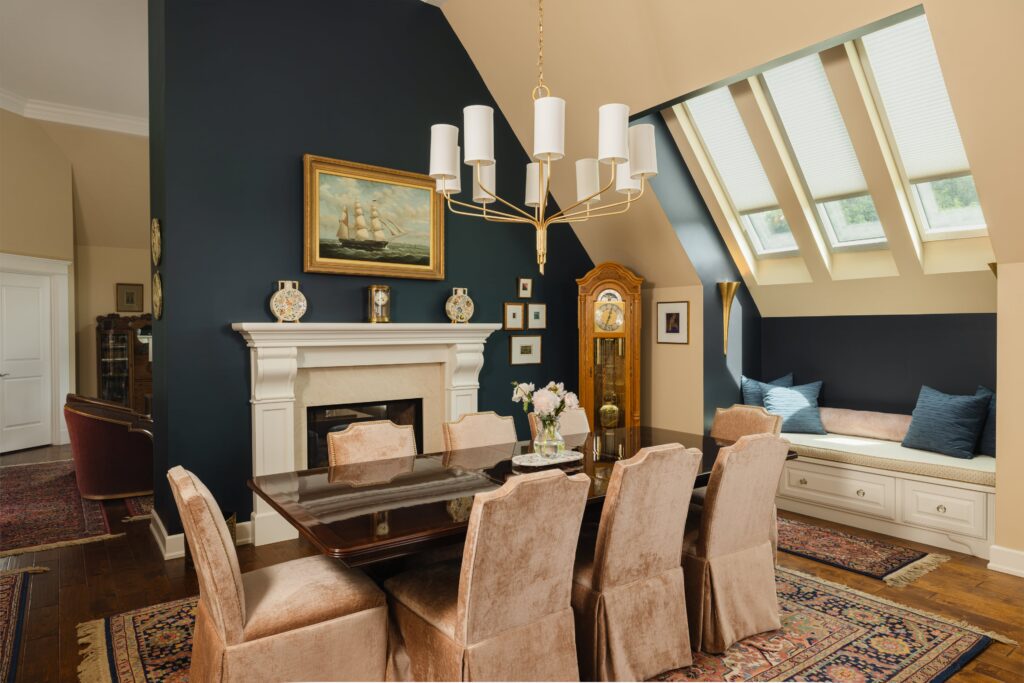
The condominium sits on the third floor of a Tudor-style building, which gave us plenty of architectural character—and plenty of interesting ceiling angles and quirks to navigate.
One of the biggest design challenges was introducing new millwork without making it look new. We wanted the additions to feel completely natural to the architecture, almost as though they had always been part of the home.
Custom design is particularly valuable in spaces like these. Instead of trying to force standard solutions into unusual architecture, cabinetry and millwork can respond directly to the dimensions and character of the room.
The goal isn’t always to correct a quirky old building. Sometimes those quirks are exactly what make it special.
How Do You Make Dark Rooms Feel Connected to Bright Ones?
Another challenge was the dramatic difference in natural light throughout the home. Some spaces received abundant daylight, while others were considerably darker.
Rather than treating every room identically, we considered how color, lighting, materials, and furnishings could create continuity while still allowing each space to respond to its own conditions. Updated lighting became an important part of creating warmth and visual connection throughout the residence.
A cohesive home doesn’t mean every room needs the same palette or level of brightness. It means there should be a visual thread that carries you naturally from one space into the next.
Yes, You Can Have a Beautiful Home With Cats
Two cats were also very important members of this household, which meant durability couldn’t be an afterthought.
Is there really such a thing as completely cat-proof upholstery? Probably not.
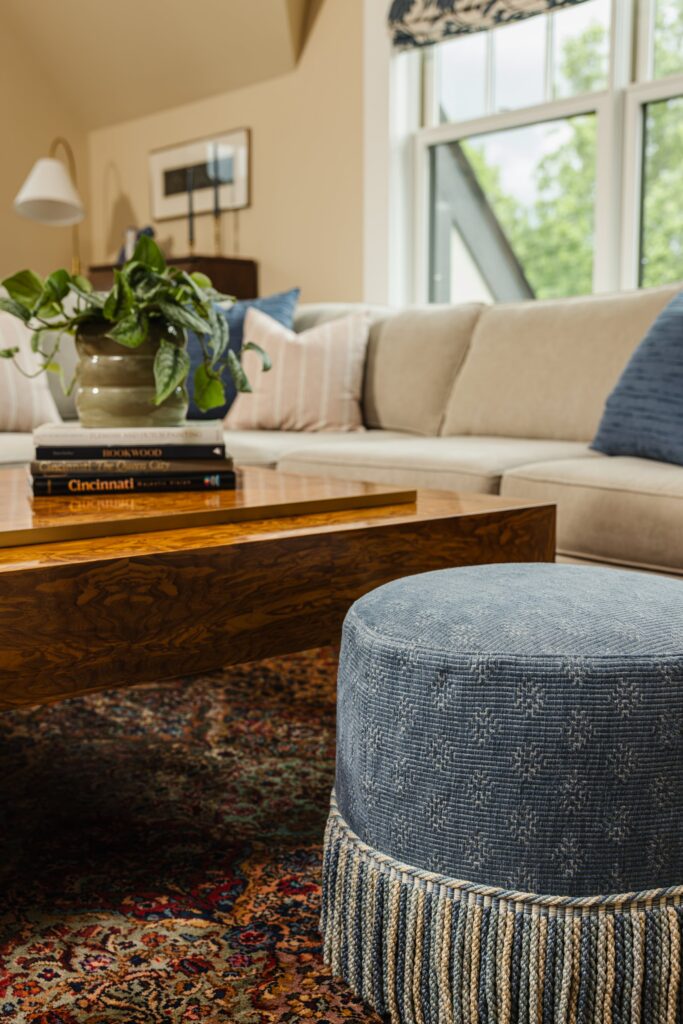
Instead, we selected materials and textures designed to wear gracefully and be less tempting for scratching and climbing.
That’s an important distinction in family-friendly and pet-friendly interior design. We don’t believe a beautiful room should require its owners to worry constantly about actually living in it. Performance, durability and maintenance need to be considered alongside color and style from the beginning.
Can You Update a Kitchen Without Replacing the Cabinets?
Absolutely—and this kitchen is a perfect example.
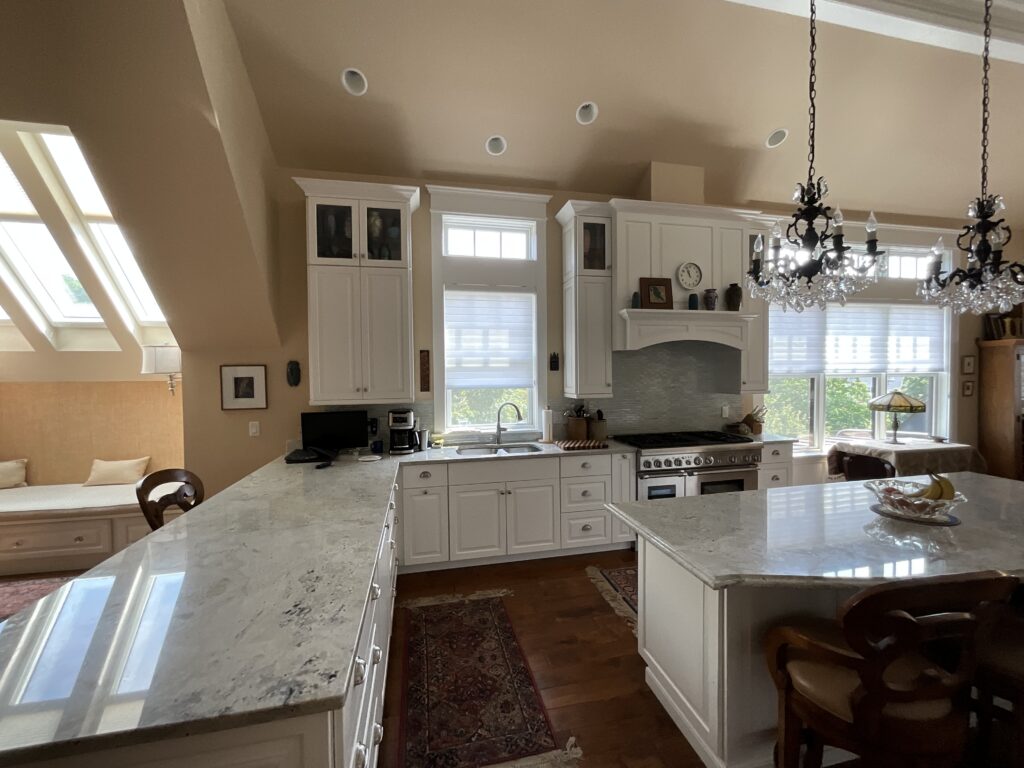
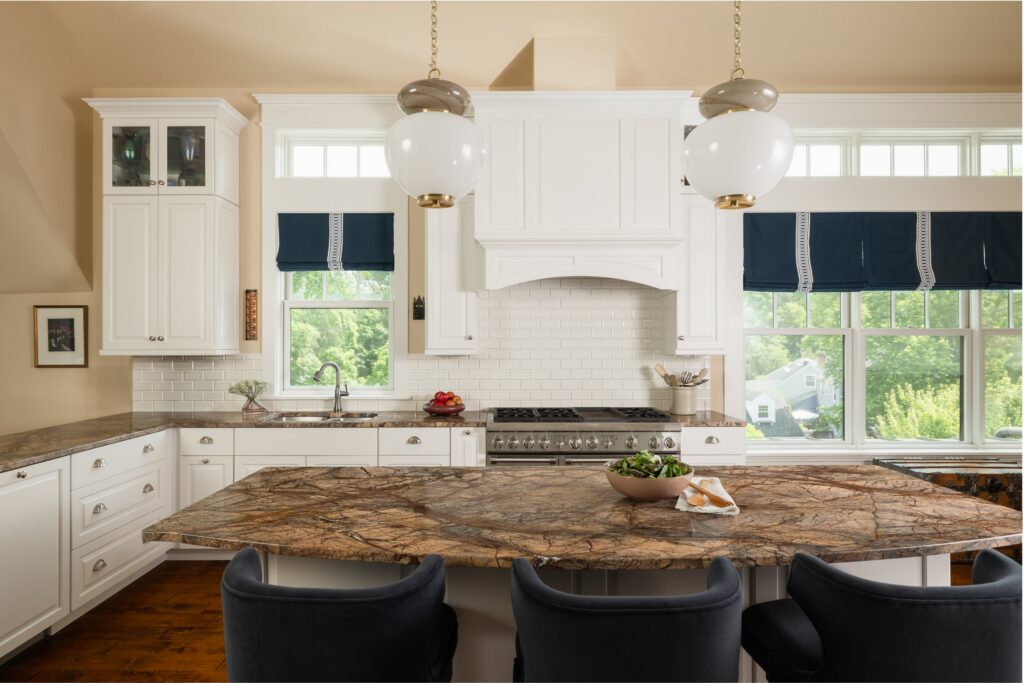
The existing cabinetry was still in excellent condition, so replacing it would have added significant expense without necessarily adding equivalent value to the finished space. Instead, we concentrated the investment on the elements that would have the greatest visual impact.
We replaced the backsplash, countertops, lighting, hardware and bar stools while keeping the original cabinetry. Those targeted changes gave the kitchen an entirely new appearance at a fraction of the cost of a full kitchen renovation.
For homeowners considering a kitchen renovation, this is one of the first questions worth asking: Are the cabinets actually the problem?
If the layout works and the cabinetry is well constructed and in good condition, a thoughtful kitchen refresh may be a better investment than tearing everything out simply because it’s dated.
The Best Homes Don’t Look Like They Were Designed All at Once
When this project was complete, the clients didn’t have a home that looked as though everything had arrived on the same delivery truck.
They had something much more personal.
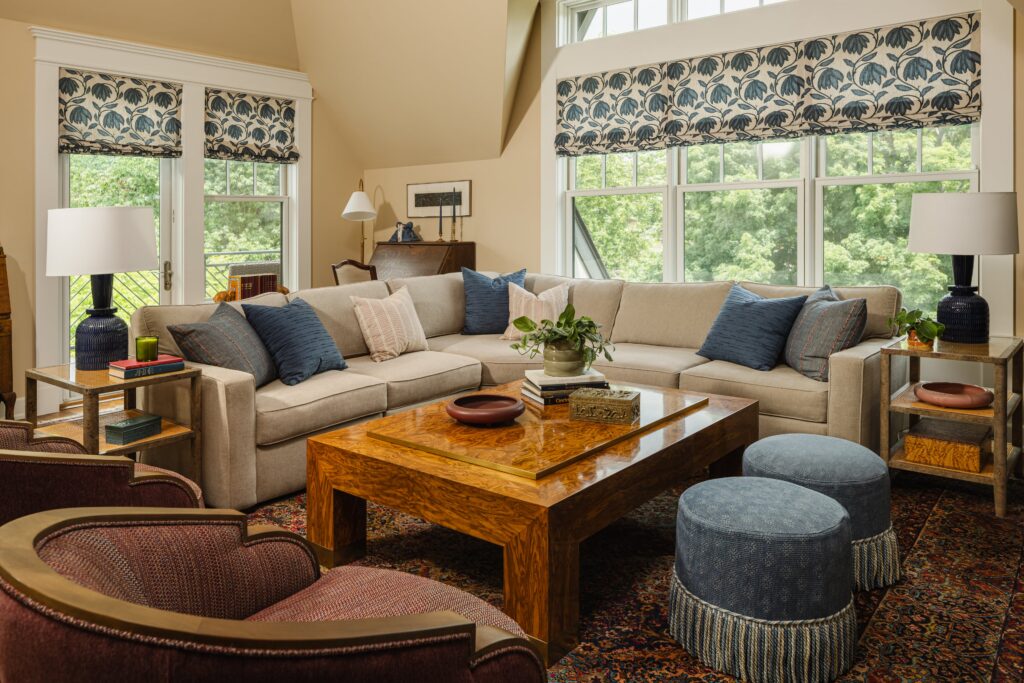
Their antiques still mattered. Their rugs still brought richness and history to the rooms. New furnishings added comfort and function. Custom millwork felt appropriate to the architecture. The kitchen felt refreshed rather than unnecessarily replaced. And the new furniture layouts made entertaining easier while still creating comfortable places for everyday life.
That’s ultimately what Layers of Character is about.
Good interior design isn’t always about transformation through replacement. Sometimes it’s about editing, layering and finding the right relationship between what a home already has and what it still needs.
And very often, that’s what gives a home its soul.