Bringing Personality to a Historic Cincinnati Home
What do you do when you’ve finished renovating your home, but some of the rooms still don’t feel finished? Interior design can bridge the gap between a beautifully renovated house and a home that truly reflects the people who live there.
That was the challenge for the owners of this historic Cincinnati home. They had recently completed a beautiful renovation and expansion, but there were still a few spaces that didn’t quite feel like them.
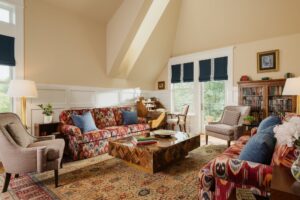
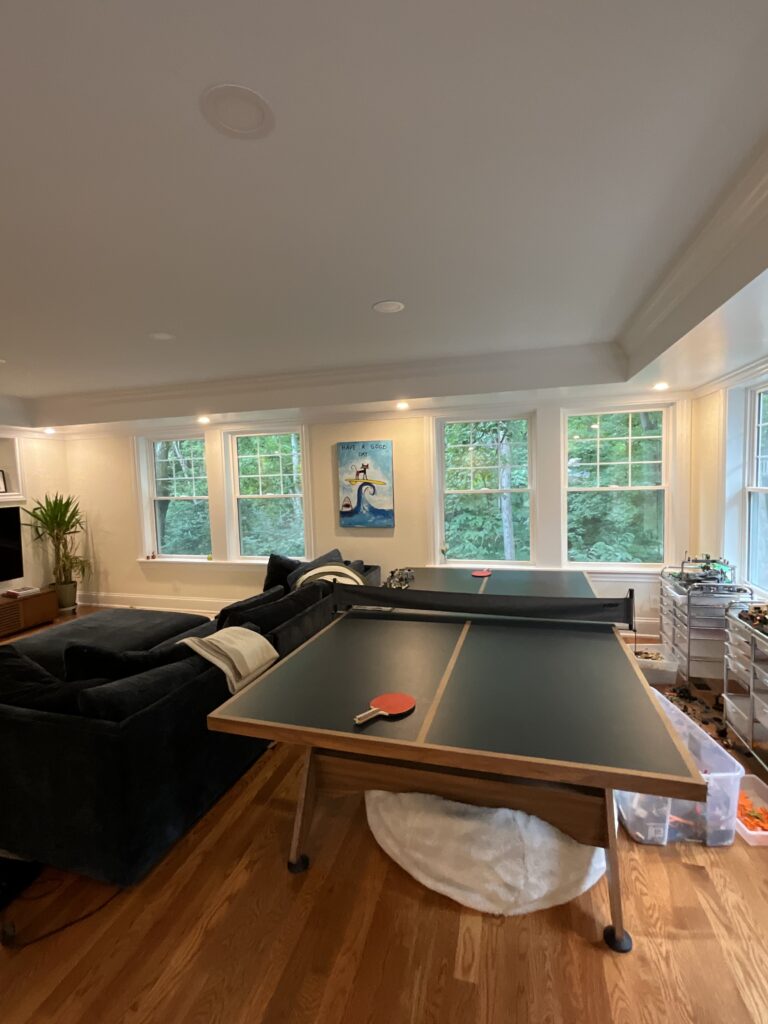
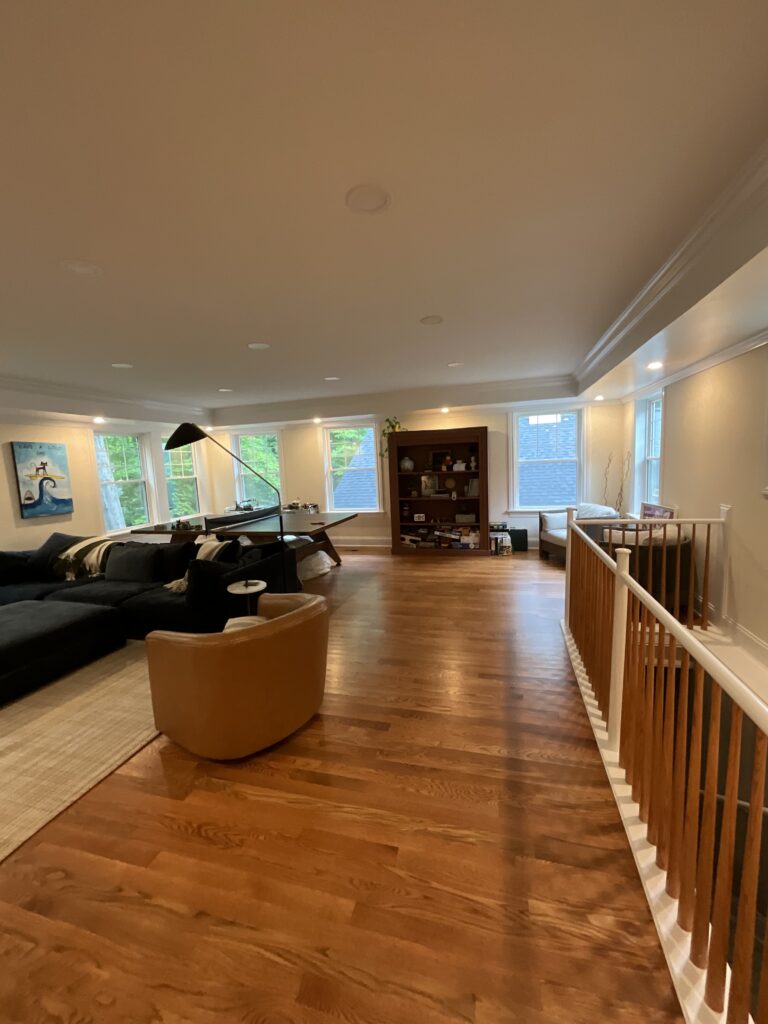
The living room needed, in their words, “more pizzazz.” It also needed to work harder for a family with kids who loves to entertain. They wanted to keep their existing blue sofa and ping pong table, add another game table, create more storage and finally figure out what to do with an awkward back corner that had become unused space.
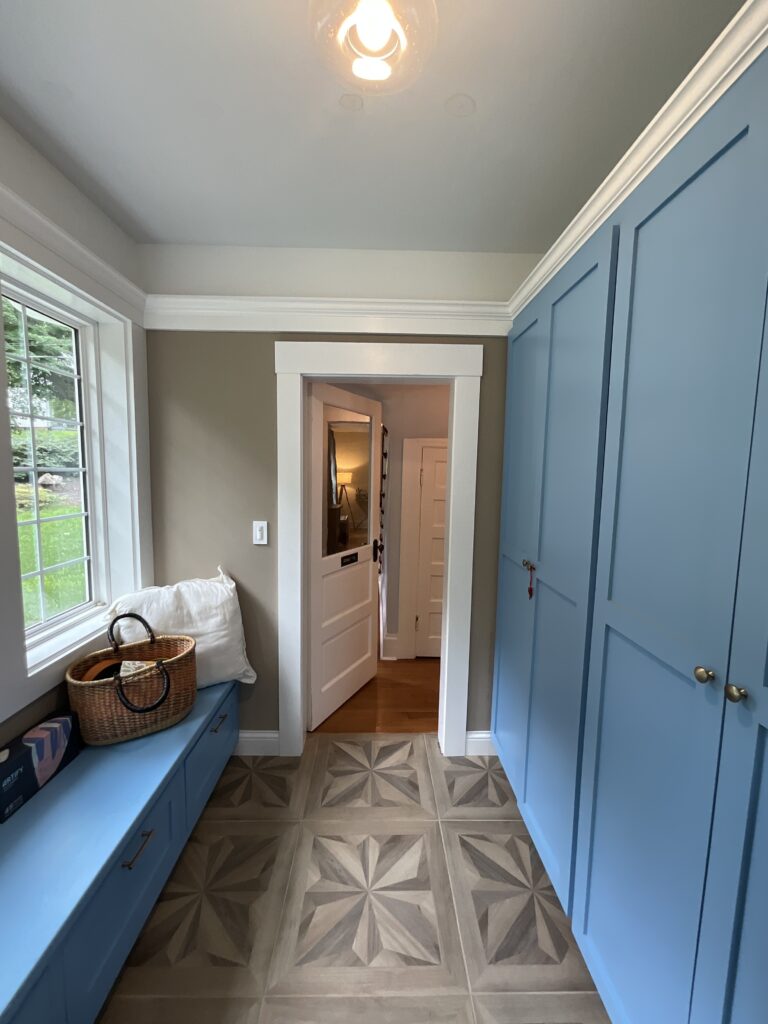
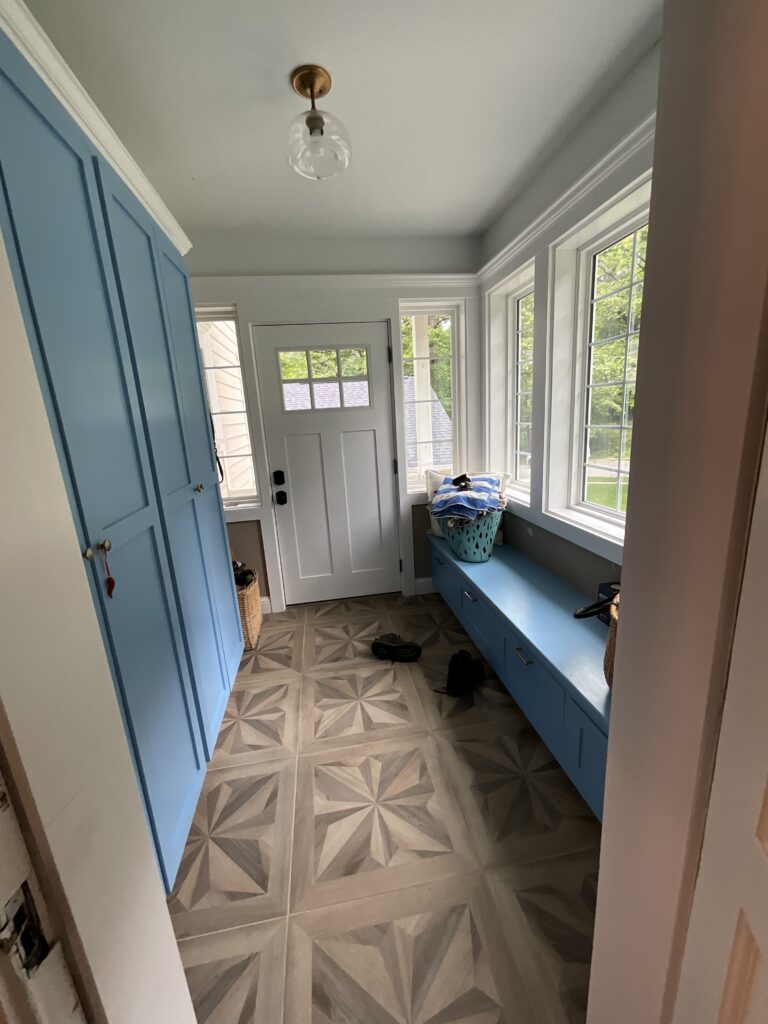
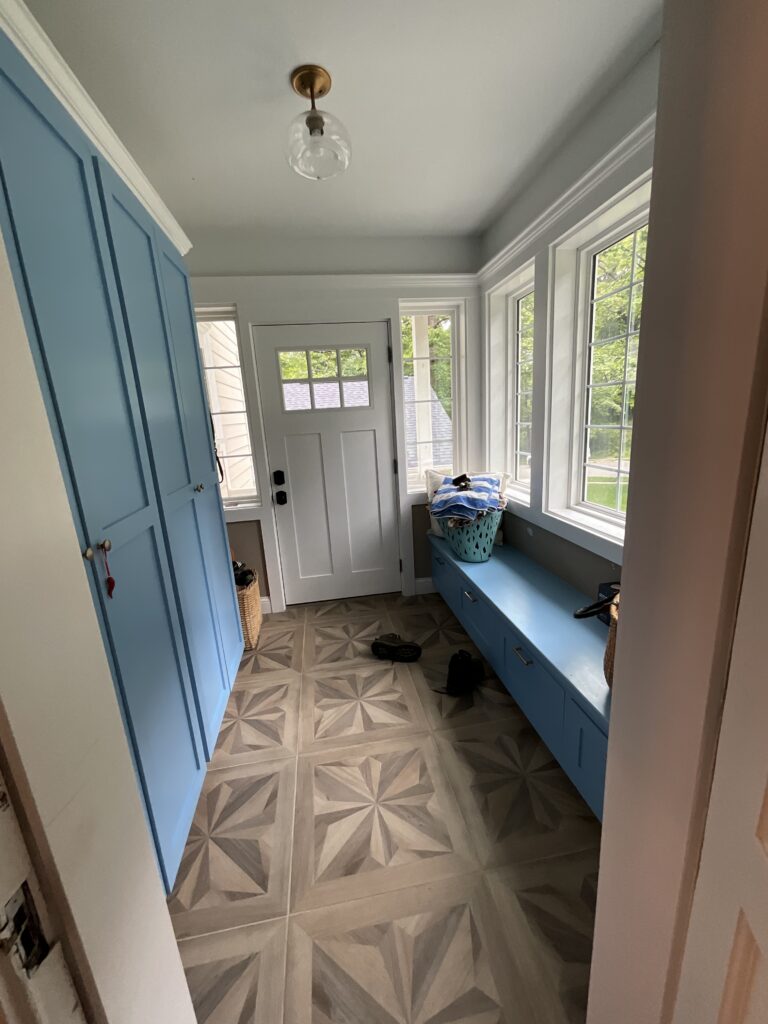
The mudroom had a different challenge. It functioned perfectly well, but there was nothing particularly joyful about walking into it every day. The clients wanted to keep the existing tile, cabinetry and layout, which meant our job wasn’t to redesign the room. It was to give it personality.
How Do You Add Personality to a Home After a Renovation?
Adding personality after a renovation doesn’t necessarily mean replacing what you already have. Often, the best approach is to identify what’s working, keep the pieces worth keeping, and use color, pattern, furnishings, and custom details to bring the rest of the home to life.
Our interior design process always begins with understanding not only how our clients want their homes to look, but how they want them to feel and how they actually live in them. We also look carefully at what’s already working. Good interior design doesn’t require replacing everything simply because you’re ready for a new look.
For this family, the Cotswolds are one of their favorite places, and that gave us a natural starting point. We wanted the rooms to feel colorful, cozy, and traditional, while still having a sense of playfulness that suited the family and felt appropriate for their historic Cincinnati home.
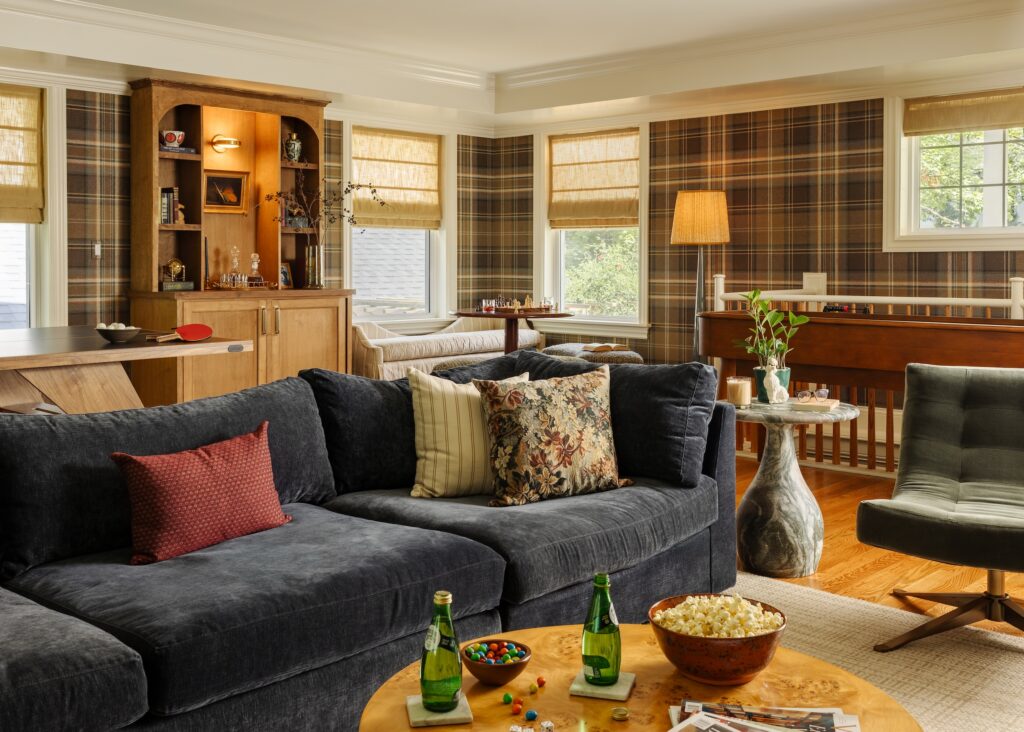
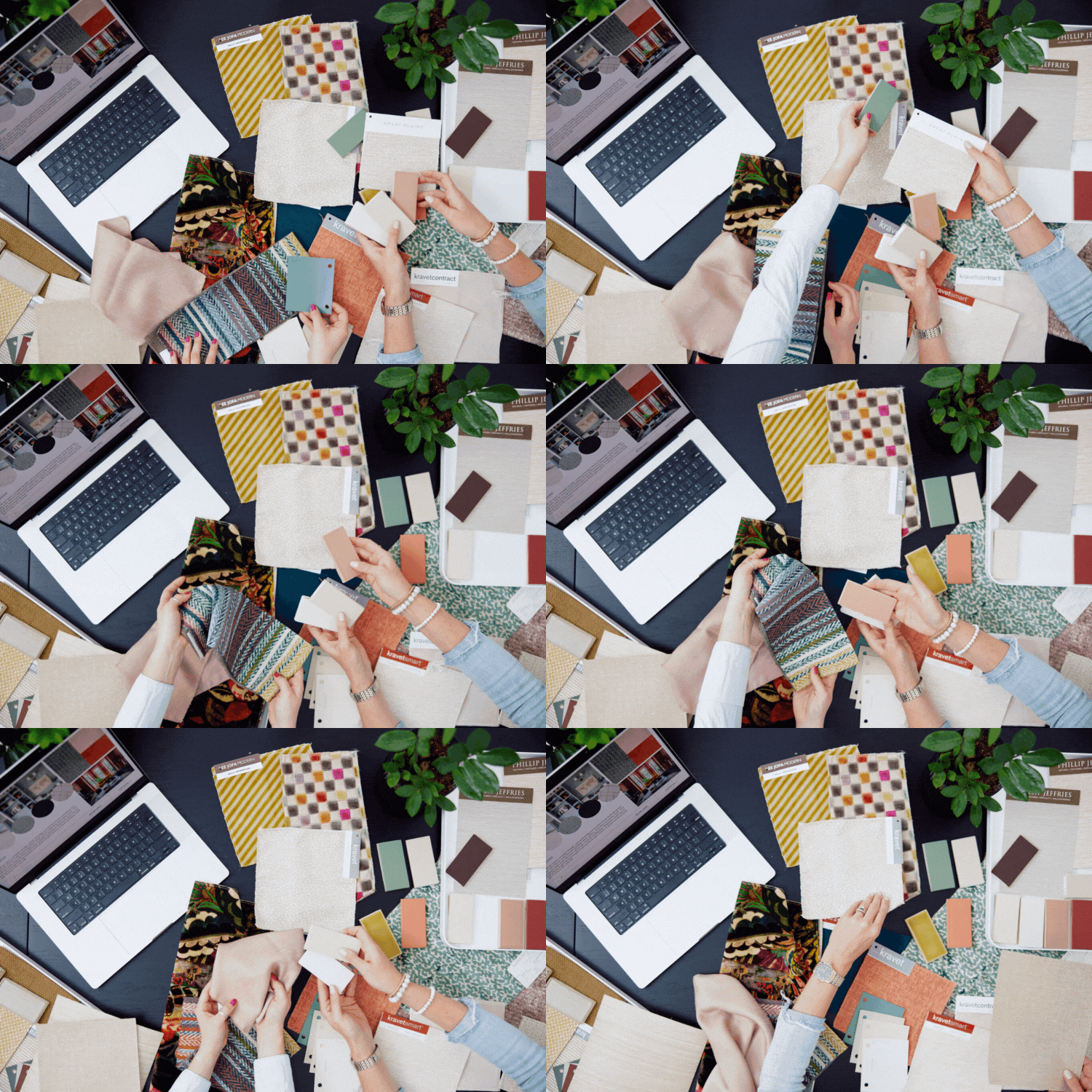
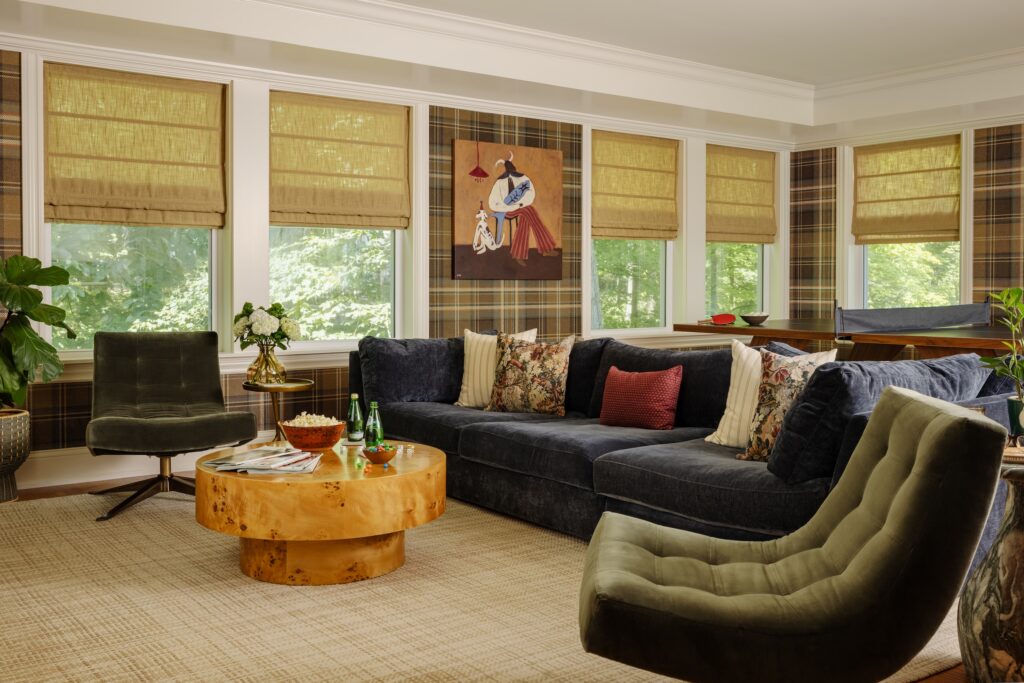
In the living room, we began with a traditional plaid wallcovering and the clients’ existing blue sofa. Rather than viewing the sofa as something we needed to work around, its blue became part of the foundation of our color story. We layered in richer colors, patterns, and textures that made the existing piece feel completely intentional within the new room.
Can an Interior Designer Work With Furniture You Already Own?
Absolutely. A good interior designer can incorporate existing furniture into a new design when the pieces still function well, suit the space, and are worth keeping.
The clients’ blue sofa is a perfect example. By allowing its color to influence the palette for the rest of the room, we were able to keep a piece they already loved while making it feel completely at home within a much more layered design.
Keeping the right existing pieces can also allow a client’s design investment to go toward elements that will make a greater difference. In this living room, storage was one of those priorities.
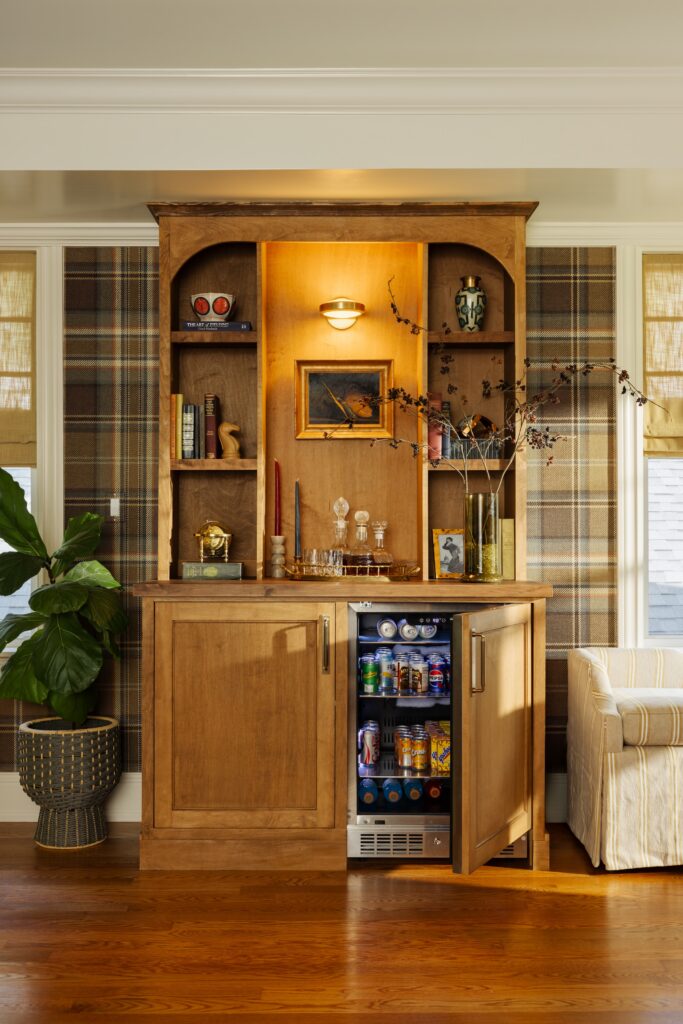
An existing bookcase wasn’t maximizing the space, so rather than simply painting it, we designed a permanent custom built-in with closed storage below. We even incorporated a hidden beverage refrigerator into the cabinetry. The result gave the family significantly more useful storage while creating something that looks like it has always belonged in the home.
What Can You Do With an Awkward Corner of a Living Room?
An awkward or unused corner can often become one of the most functional areas in a living room when it’s given a specific purpose.
This room had exactly that kind of space. The back corner had become a bit of no man’s land because the family wasn’t sure how to use it. Instead of treating it as leftover space, we transformed it into a dedicated place for cards and games.
A custom window bench created a cozy place to sit, while a red lacquered game table and two curved ottomans gave the area a clear purpose. The ottomans can also move throughout the living room when additional seating is needed, allowing the room to function differently depending on whether it’s being used for family game night or a house full of guests.
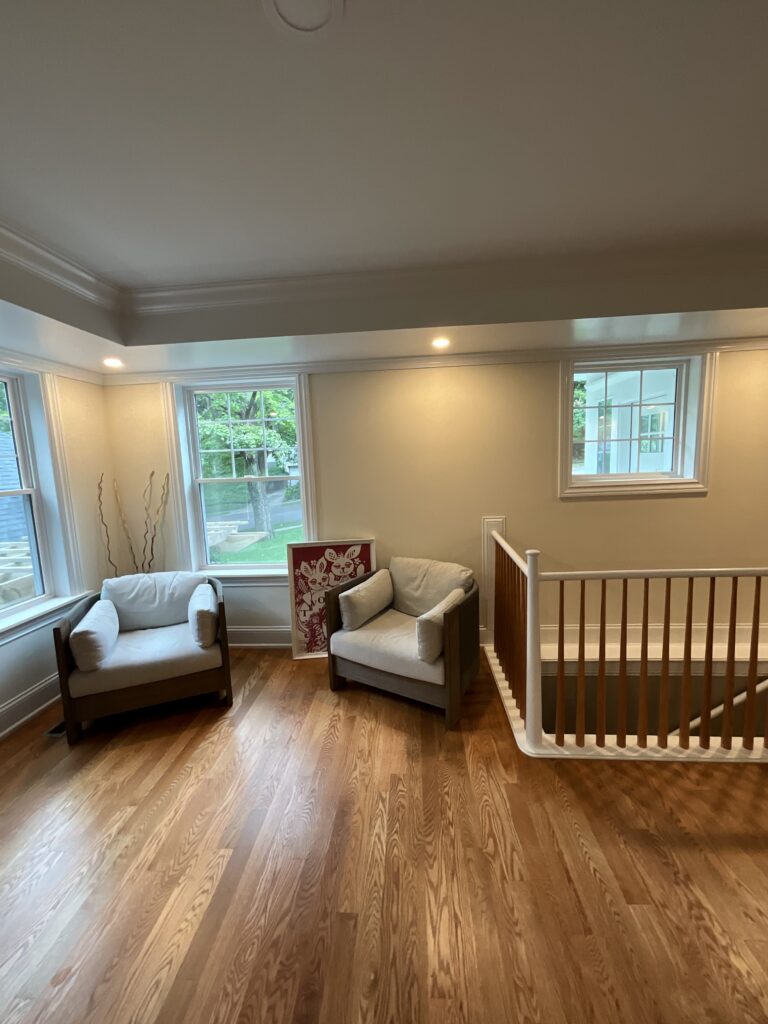
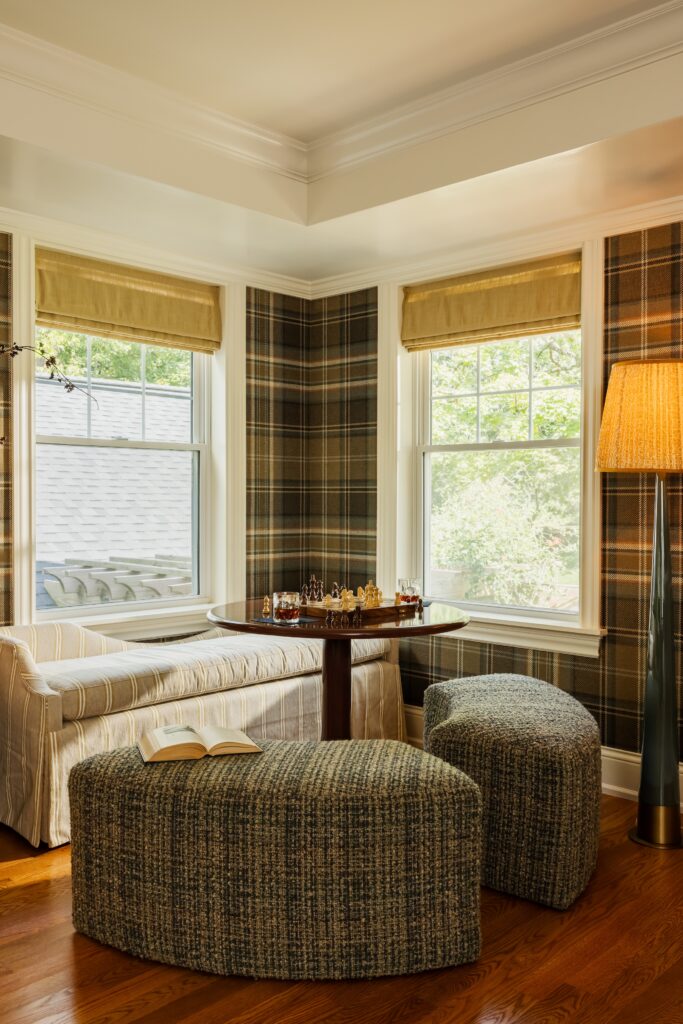
This is an important part of designing a family-friendly living room. Not every piece of furniture needs to have one permanent job. Flexible furniture and seating allow a room to adapt to everyday family life as well as entertaining.
Because this is also a home with children, pets, and plenty of activity, the materials needed to support real life. We chose durable, family-friendly upholstery that allows everyone to actually enjoy the room without worrying about every spill, paw print, or game night. A playful piece of artwork brought the colors together and added exactly the sense of fun the room had been missing.
A family-friendly living room can still be sophisticated and beautiful. In fact, we believe the best family spaces are polished without being precious and designed to be lived in rather than simply looked at.
How Can You Update a Mudroom Without Renovating It?
You can completely transform a mudroom without renovating it by keeping the functional elements that already work and changing high-impact details such as paint, wallcovering, lighting, window treatments, textiles, and accessories.
That was exactly our approach here. The existing layout worked. The cabinetry worked. The tile floor worked. There was no reason to tear out perfectly functional elements simply for the sake of making the room feel new.
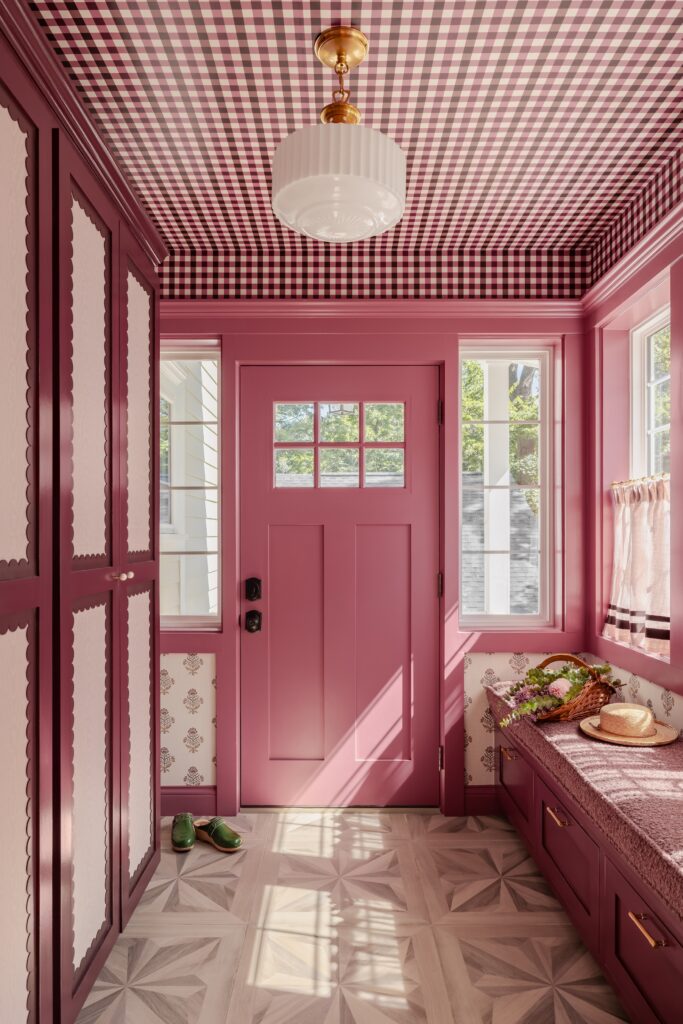
Instead, we focused the investment on the details that could create the greatest visual impact. We drenched the mudroom in a deep plum and introduced beautiful wallcovering to give the space depth and personality. A café curtain, scalloped trim, and wallcovering added charm to the existing cabinetry, while a new light fixture provided better illumination, more appropriate scale, and considerably more character.
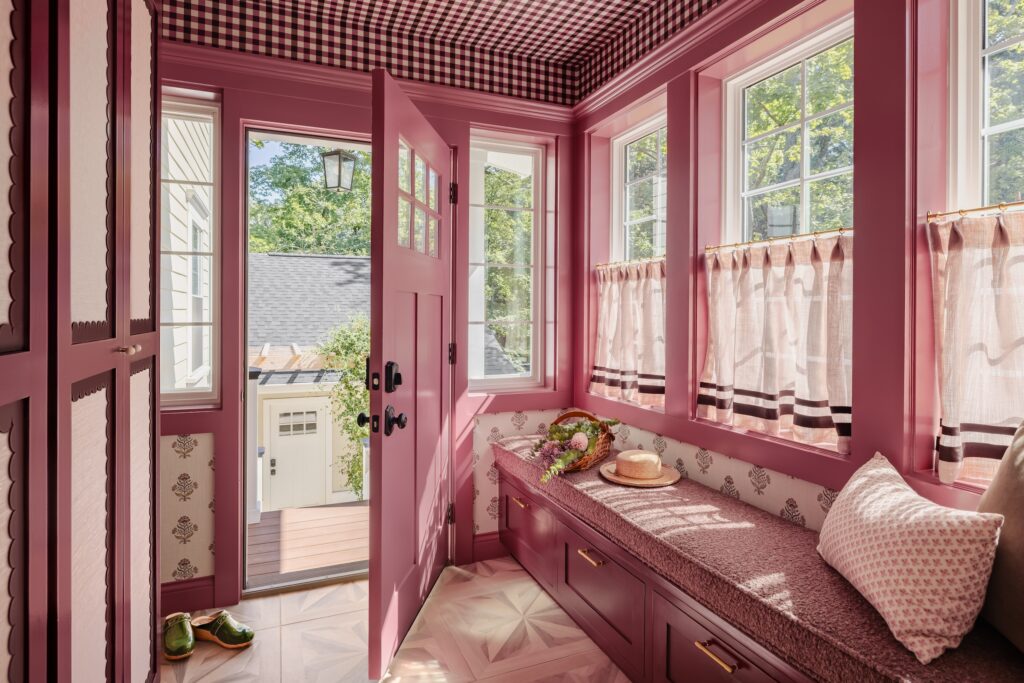
A custom bench cushion and playful pillows completed the transformation. Without changing the footprint, flooring, or cabinetry, what had once been a purely functional pass-through became warm, colorful, and memorable.
Small spaces such as mudrooms and powder rooms can also be wonderful places to take a design risk. They don’t need to look exactly like the rooms around them, but they should still feel connected to the overall story of the home. Here, the rich color, traditional influences, and layered patterns gave the mudroom its own personality while still making sense within this character-filled historic home.
The Result: Colorful Spaces Designed for Real Life
The finished living room is now a colorful, comfortable gathering place designed around how this family actually lives. There is room for ping pong, card games, parties, conversation, and ordinary evenings at home. Thoughtful storage keeps everyday necessities tucked away, while flexible seating allows the room to change depending on how the family is using it.
The mudroom proves that thoughtful interior design can have just as much impact in a small, functional room. What was once simply a pass-through is now warm, colorful, and full of personality, a joyful space that feels every bit as considered as the rest of the home.
Together, the two rooms demonstrate something we believe strongly at Jackie Barnes Design: you don’t always need to renovate a room to transform it. Sometimes the architecture and function are already there. What a home is missing is the layer that makes it personal: the color, pattern, furnishings, custom details, and thoughtful decisions that tell the story of the people who live there.
Whether we’re involved from the beginning of a renovation or helping clients figure out what comes next after construction is complete, our Cincinnati interior design team looks at what’s already working, what isn’t, and where thoughtful design can make the biggest difference.
For this historic Cincinnati home, that meant a little inspiration from the Cotswolds, a lot more color, and two rooms that finally feel every bit as special as the home around them. What would it look like in your home?