What the Holidays Can Teach You About Your Home
The holidays have a funny way of revealing what works in your home, what doesn’t, and what might be worth rethinking.
You’ve spent days preparing for Thanksgiving. The table is set, the candles are lit, and the house looks beautiful. Then the guests arrive.
Within twenty minutes, twelve people are standing in your kitchen, someone is blocking the refrigerator, your husband is searching for another dining chair, and there’s a mountain of coats on the guest room bed. Sound familiar?
Here’s the thing: Your home might be trying to tell you something. The holidays are one of the best opportunities to discover how your home really functions. When rooms are filled with people, spaces are used differently, and everyday routines are interrupted, the little things that don’t work become impossible to ignore.
As interior designers, we find those observations incredibly valuable. This holiday season, instead of simply working around your home’s quirks, pay attention to them. You might just discover the inspiration for your next renovation.
Why Is Everyone Always in the Kitchen?
You have a beautiful living room, a perfectly good family room, and maybe even a dedicated entertaining space. And yet, every single guest is standing in your kitchen while you’re trying to get a turkey out of the oven.
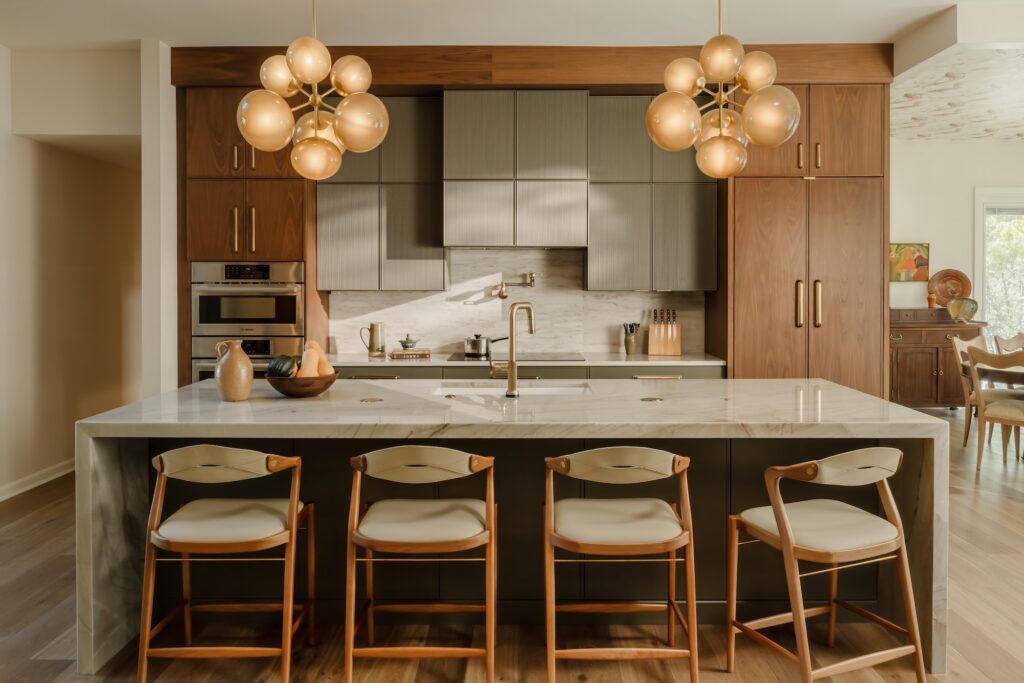
There’s a reason everyone gravitates toward the kitchen. It’s where the action happens. But there’s a difference between a kitchen that’s designed to welcome people and one where everyone is constantly in the way.
Can guests gather comfortably without interfering with cooking? Is the island large enough? Do people have a natural place to sit or set down a drink? These are the kinds of questions worth asking when evaluating your kitchen’s functionality.
Sometimes the solution is a larger island or a better layout. Other times, it’s opening up the connection between the kitchen and adjacent living spaces. The goal isn’t necessarily to keep people out of the kitchen. It’s to make room for them.
The Great Dining Room Shuffle
You know the maneuver. Everyone sits down for dinner, and suddenly there’s an elaborate choreography involved in getting from one end of the table to the other. Someone has to stand up, someone else has to push in their chair, and the person carrying the mashed potatoes is just hoping for the best.
This is what poor traffic flow looks like in real life. We spend a tremendous amount of time thinking about how people move through a space because even the most beautiful room can become frustrating when circulation hasn’t been carefully considered.
Perhaps your dining table is too large for the room, or maybe the furniture arrangement needs to change. It could also be that the relationship between your kitchen and dining room simply isn’t working. These are exactly the kinds of challenges thoughtful space planning can solve.
When the Furniture Looks Beautiful but Nobody Knows Where to Sit
Here’s something I tell clients: A room shouldn’t just look beautiful. It should invite you to use it.
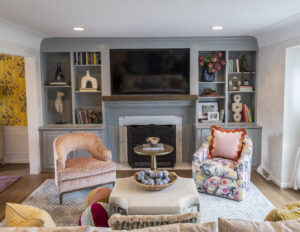
Think about your living room during your last gathering. Did guests naturally settle in and start talking, or did everyone hesitate, looking for somewhere comfortable to sit? Maybe you had enough chairs, but they were scattered around the room. Perhaps the sofa was too far from the conversation, or everyone ended up balancing plates on their knees because no convenient table was nearby.
More furniture isn’t always the answer. Sometimes, two comfortable swivel chairs can do more for a room than an additional sofa. A different furniture arrangement can create conversation where there wasn’t any before.
The best rooms don’t just accommodate people. They bring them together. When we develop furniture plans, we consider not only how a room will look but also how people will interact within it.
Where Did All This Stuff Come From?
The holidays also have a remarkable ability to expose every storage problem in your house. The serving platters you use twice a year are buried behind the everyday dishes, the pantry is overflowing, and there isn’t a good place for the extra folding chairs. Somehow, the kitchen counter has become the permanent home for everything that doesn’t have another place to go.
This is where function becomes just as important as aesthetics. A beautifully designed pantry, a thoughtfully planned mudroom, or custom cabinetry can completely change how your home operates. Storage shouldn’t be an afterthought or something you have to work around.
Unlike holiday decorations, these improvements make life easier all year long. The goal is to create a home where everything has a place and the spaces you use every day feel effortless.
Here’s the Part Most Homeowners Miss…
You don’t necessarily need a bigger house. You might just need a better plan.
We often meet homeowners who assume their frustrations can only be solved by adding square footage. Sometimes that’s true, but just as often, the issue is how the existing space is being used.
A room that feels too small might have furniture that’s out of scale. A kitchen that feels crowded might have an inefficient layout. A dining room that sits empty eleven months of the year might be an opportunity to create a space that serves your family in more meaningful ways.
Before assuming you need more space, consider whether you could get more out of the space you already have. That’s where good design begins, and it’s often where some of the most exciting transformations happen.
Your Holiday Homework (Don’t Worry, It’s Easy)
I’m not suggesting you spend Thanksgiving taking measurements or making renovation plans while your guests are enjoying dessert. Please don’t! But after everyone has gone home, take ten minutes to reflect on how your home functioned during the festivities.
First, think about what drove you crazy. Was it the kitchen congestion, the lack of seating, or the endless trips between rooms? Write down the frustrations while they’re fresh, especially the ones you’ve noticed at previous gatherings.
Next, consider what everyone loved. Maybe your family gravitated toward the fireplace all evening, or perhaps your kitchen island became the perfect gathering place. Those are the things worth preserving and building upon.
Finally, ask yourself what you’d change if you could. Forget about construction costs or logistics for a moment. If you could wave a magic wand and change three things about your home before next Thanksgiving, what would they be?
There’s your starting point. Turn those observations into a wish list by separating the things you need from the things you’d simply love to have. Then think about which changes would improve your everyday life, not just holiday entertaining. Those are often the improvements worth prioritizing.
Want a Different Experience Next Thanksgiving? Start Now.
One of the biggest misconceptions about renovating a home is how long the process actually takes. The construction phase is only part of the equation, and so much needs to happen before the first wall comes down.
There are layouts to consider, designs to develop, materials to select, budgets to establish, contractors to coordinate, and products to order. Custom cabinetry, specialty finishes, and furnishings can all require significant lead times. Beautiful, thoughtfully executed projects take time, and planning ahead allows everyone involved to make better decisions.
If you’d love to host Thanksgiving next year in a kitchen that finally works, a dining room where everyone fits, or a living room that actually encourages conversation, now is the time to start thinking about it. Not because you need to rush, but because you shouldn’t have to.
A Beautiful Home Should Make Life Better
At Jackie Barnes Design, we believe good interior design is about much more than beautiful furniture, finishes, and fabrics. It’s about understanding how you live and creating spaces that make those experiences better.
Sometimes that means a complete renovation, sometimes it means rethinking a floor plan, and sometimes a few carefully considered changes can make an extraordinary difference. What matters most is finding the right solution for your home and the people who live there.
So enjoy the holidays. Fill your home with friends and family, make memories, and laugh when everyone inevitably ends up in the kitchen. When the last guest leaves, take a moment to think about what you might want to do differently next year.
What if next holiday season, your home worked as beautifully as it looked? We’d love to help you find out.
Jackie Barnes Design is a full-service interior design firm serving Cincinnati and surrounding communities. If you’re considering a renovation or reimagining how your home functions, contact our studio to schedule an initial consultation.