Key Measurements Every Homeowner Should Know When Designing a Living Room
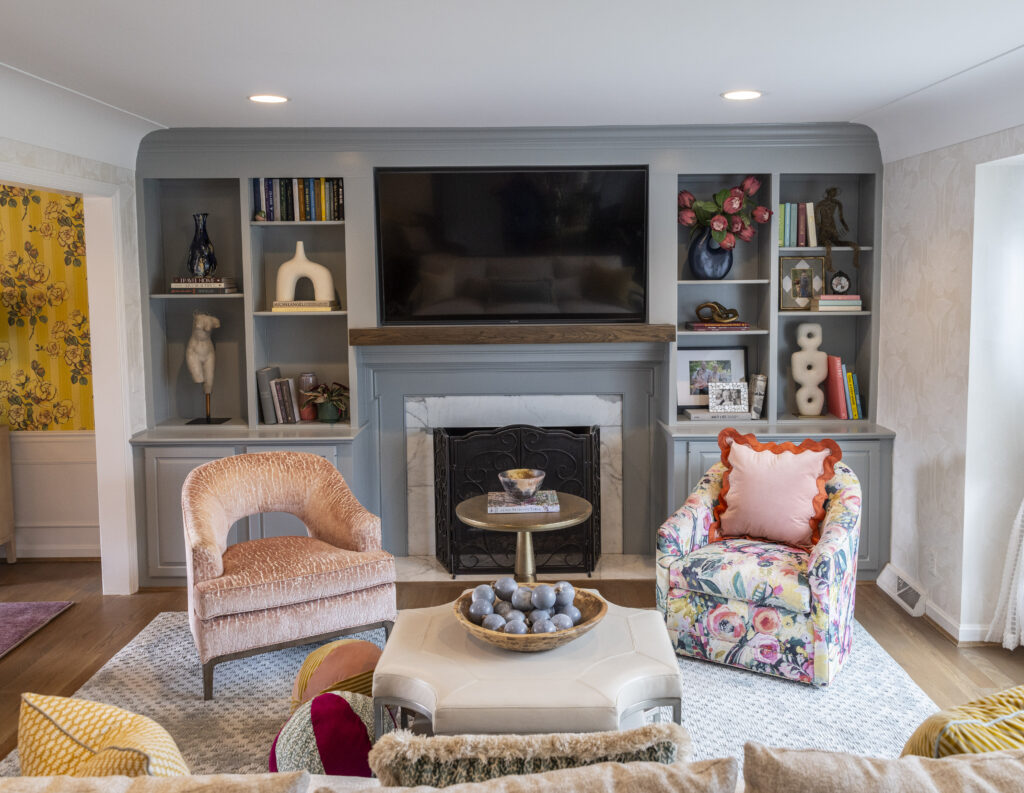
A beautifully designed living room isn’t about the furniture alone, it’s about how everything fits together. Flow, comfort, balance… that’s the magic. And if you want the truth, great living rooms start with measurements, not mood boards. As designers, we always measure first because even the most gorgeous pieces can feel awkward (or downright annoying) if the scale is off. These are the key living room measurements we rely on to make spaces feel effortless, intentional, and livable.
First things first: get to know your room. Measure the full length, width, and ceiling height before you fall in love with a sofa. These dimensions affect everything, from how large your seating can be to how long your curtains should be. And let’s talk about walkways. Main paths should be about 36 inches wide so people can move comfortably through the space, while secondary paths can be closer to 30 inches. Always factor in door swings and open transitions… nothing ruins a room faster than a chair that blocks the flow.
Seating layout is the backbone of a good living room. A sofa should typically take up about two-thirds of the wall it sits against so it feels proportional, not crammed or floating. Chairs should be close enough to invite conversation, usually within 8 to 10 feet off the sofa. If you have to shout to chat, they’re too far apart.
Coffee tables and side tables may seem small, but they carry a lot of weight. A coffee table should be about half to two-thirds the length of your sofa. Side tables look and function best when they sit at or just below the height of the sofa arm – anything more than a 4” difference feels clunky, anything lower feels awkward.
Rugs are where I see people go wrong the most. A rug that’s too small makes the entire room feel off. At least, the front legs of all seating should sit on the rug, but ideally, all four. In most living rooms, an 8’x10’ or 9’x12’ rug creates the right sense of balance and grounding. When in doubt, go bigger.
Media placements and lighting are also driven by precise measurements. The center of a TV should align with seated eye level- typically 42 to 48 inches from the floor.
Lighting should support both function and ambience:
- Floor lamp shades should sit at eye level when seated
- Table lamp shades should align with seated eye height
- Ceiling fixtures should maintain at least 7 feet of clearance from the floor
A well-designed living room is never an accident. It’s the result of thoughtful planning, smart measurements, and a little restraint. When you understand the dimensions behind furniture placement, circulation, lighting, and scale, you stop guessing and start designing with confidence.
In the end, great design isn’t about filling a space- it’s about letting every element fit exactly where it belongs.