What We Saw at KBIS 2026: Kitchen and Bath Trends Shaping the Future of Home Design
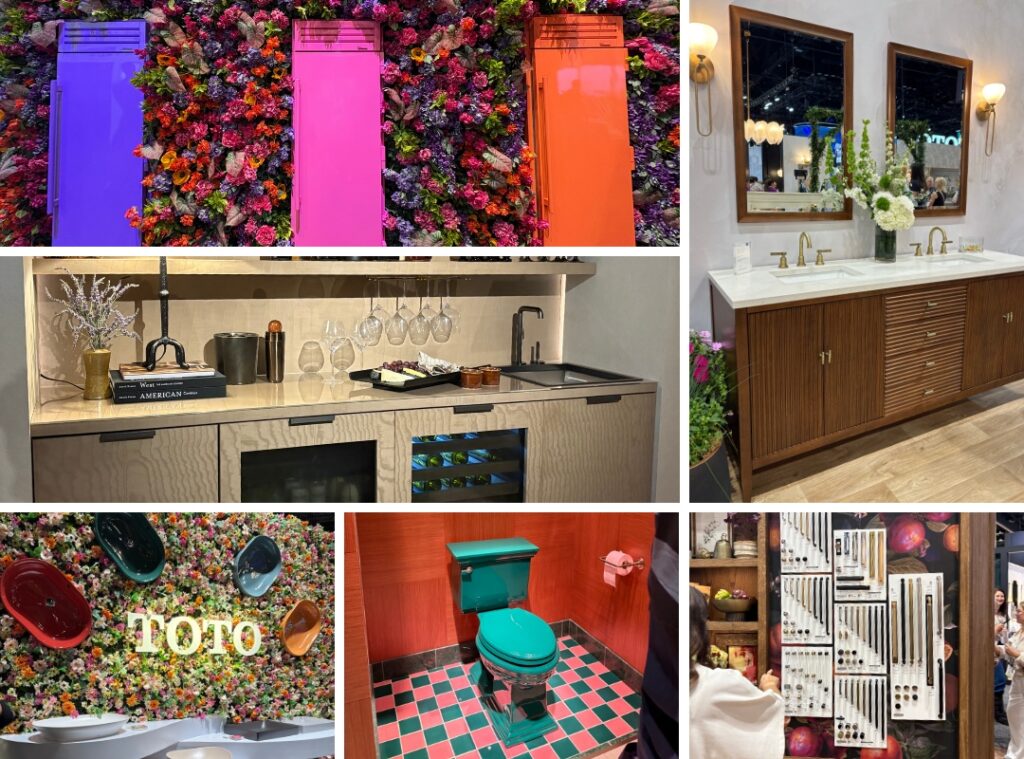
Each year, our team attends the Kitchen & Bath Industry Show (KBIS) to explore what’s next in kitchen and bath design. It’s one of the largest gatherings of designers, manufacturers, and innovators in the industry, and it gives us an early look at the ideas, materials, and technologies that will shape homes in the years ahead.
This year’s show confirmed something we’ve been noticing in our own work: kitchens and bathrooms are evolving together. Design trends that once belonged exclusively to one room are now influencing the entire home. More importantly, homeowners are increasingly prioritizing spaces that support how they live, feel, and function every day.
Here are some of the biggest themes and discoveries we brought home from KBIS 2026.
Major Kitchen & Bath Trends for 2026
Personalization Is the New Standard
One of the most consistent themes this year was the expectation that spaces should feel deeply personal. Homeowners are no longer looking for generic kitchens or bathrooms. Instead, they want designs that reflect their daily rituals, habits, and lifestyle.
This shows up in several ways:
- Storage designed specifically around how clients cook and live
- Materials that reflect the architecture of the home
- Custom cabinetry details and personalized layouts
- Design decisions that prioritize long-term livability
Designers are increasingly focusing on how a space supports the rhythms of everyday life, not just how it looks.
The Wellness-Driven Home
Another major theme was wellness.
Home design expectations have shifted significantly since the pandemic, and clients are now asking for homes that actively support their health and wellbeing.
Wellness design now includes elements like:
- Better natural and artificial lighting
- Improved water quality
- Air quality considerations
- Acoustics that create a sense of calm
Interestingly, designers are moving away from the idea of a “spa-inspired” bathroom and instead focusing on spaces that provide daily support. The goal is to reduce friction in everyday routines and create homes that feel restorative without being overly indulgent.
Bathrooms are also incorporating features like steam, aromatherapy, and lighting therapy to support relaxation and recovery.
Smarter Use of Space
One of the most exciting trends we saw was how designers and manufacturers are helping homeowners do more with the space they already have.
Rather than simply expanding kitchens and bathrooms, the industry is focusing on:
- Multifunctional spaces
- Smarter storage solutions
- Concealing clutter
- Creating visual openness
The goal is not necessarily bigger rooms, but better-designed rooms.
Warm, Organic Materials
There has been a noticeable shift away from stark minimalism and toward warmer, more natural interiors.
At KBIS this year we saw an emphasis on:
- Warm neutral palettes
- Earth tones
- Natural wood textures
- Material continuity throughout the home
Designers are embracing visual restraint and softness, creating spaces that feel grounded, calm, and timeless rather than overly trendy.
Purpose-Driven Technology
Technology is still evolving in the kitchen and bath space, but the conversation has changed.
Homeowners are no longer interested in adding technology just for the sake of innovation. Instead, they want technology that simplifies everyday life.
The best examples we saw included:
- Appliances that support multitasking
- Smart plumbing fixtures
- Lighting systems that improve daily routines
- Bathroom technology designed to enhance comfort
The key takeaway: technology should serve the homeowner, not overwhelm them.
Product Discoveries We Loved
One of the best parts of attending KBIS is discovering new products and seeing familiar brands push innovation forward.
Here are a few highlights that stood out to our team.
Kohler
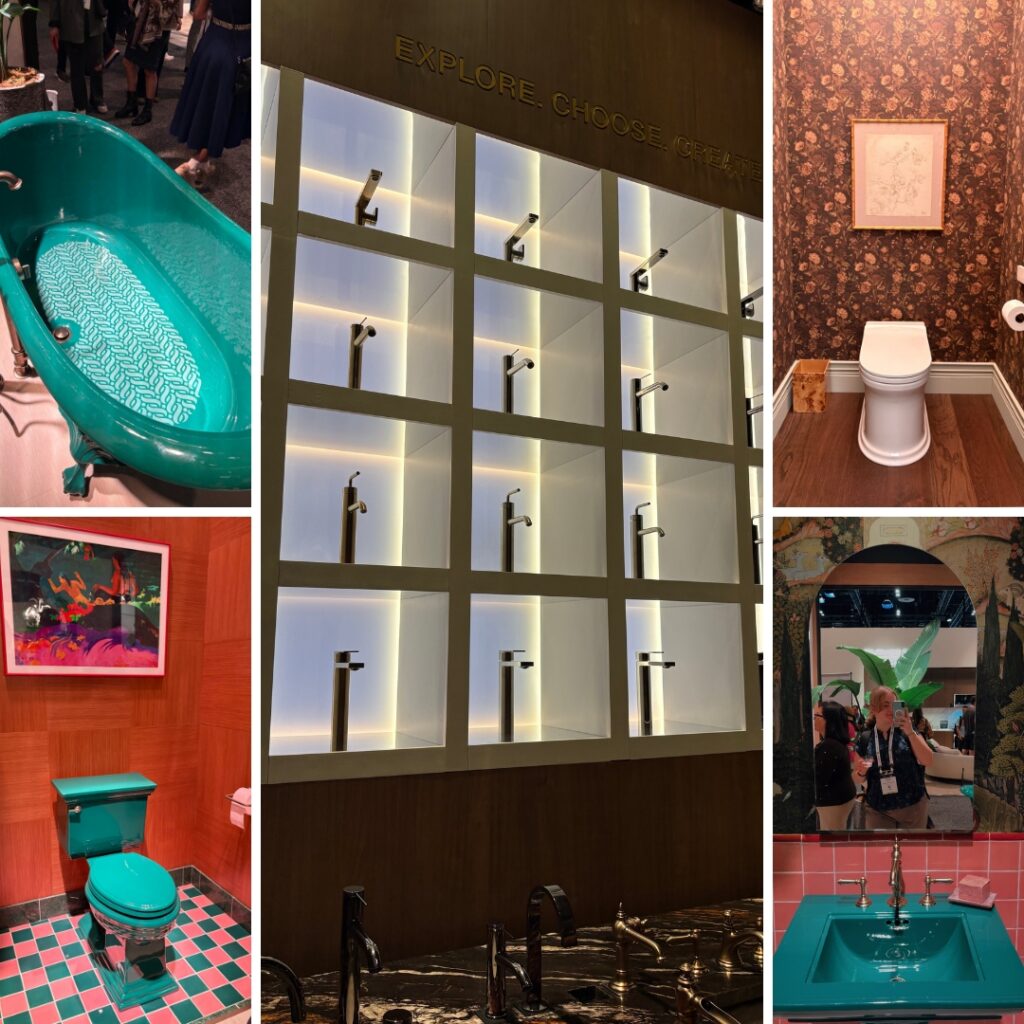
Kohler’s booth showcased bold color in bathroom fixtures, including colored vanities, tubs, and toilets that bring personality to traditional forms.
They also introduced a smart toilet attachment that monitors health indicators, illustrating how technology is increasingly integrated into everyday fixtures.
Delta / Brizo
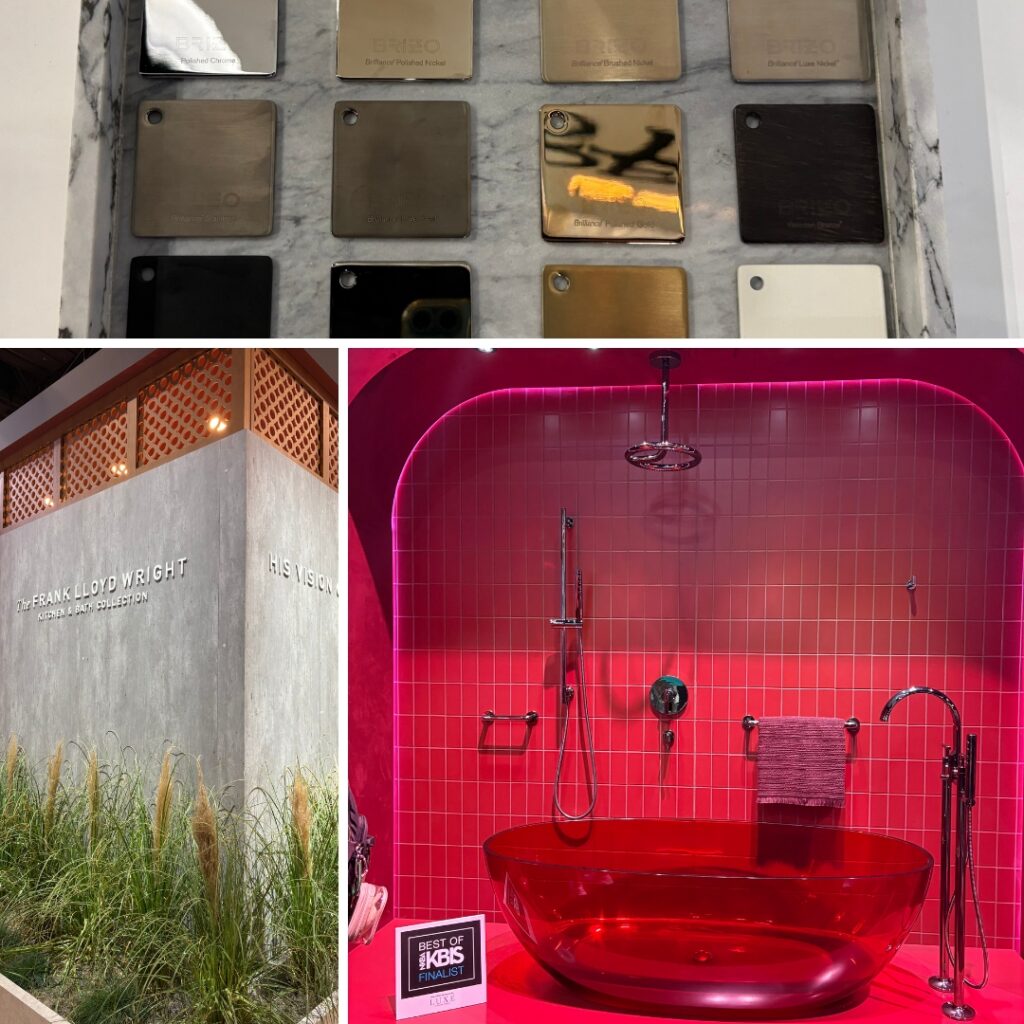
Brizo debuted a new collection inspired by Frank Lloyd Wright, bringing architectural influence directly into plumbing fixtures.
The designs emphasized sculptural forms and material expression, something we’re seeing more and more across product categories.
GE Café
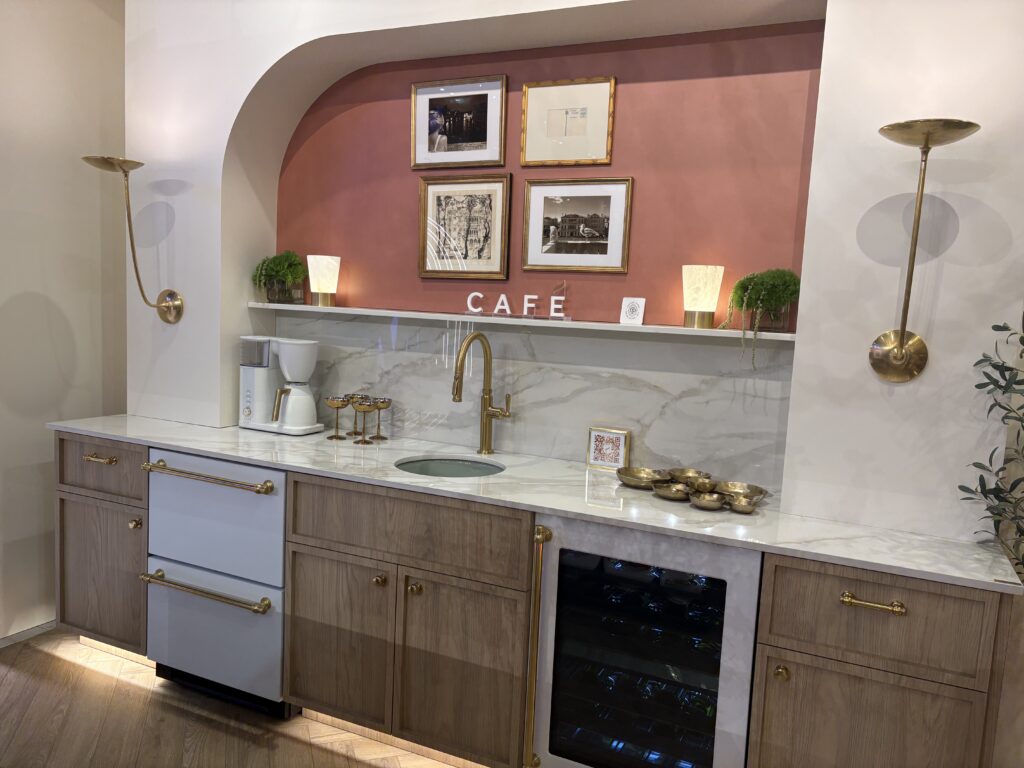
One of the most interesting appliance innovations came from GE Café.
They introduced the ability to customize appliance hardware through a partnership with Rejuvenation, allowing appliances to coordinate perfectly with cabinet hardware and other metal finishes in the kitchen.
This kind of customization helps kitchens feel more cohesive and thoughtfully designed.
Cosentino
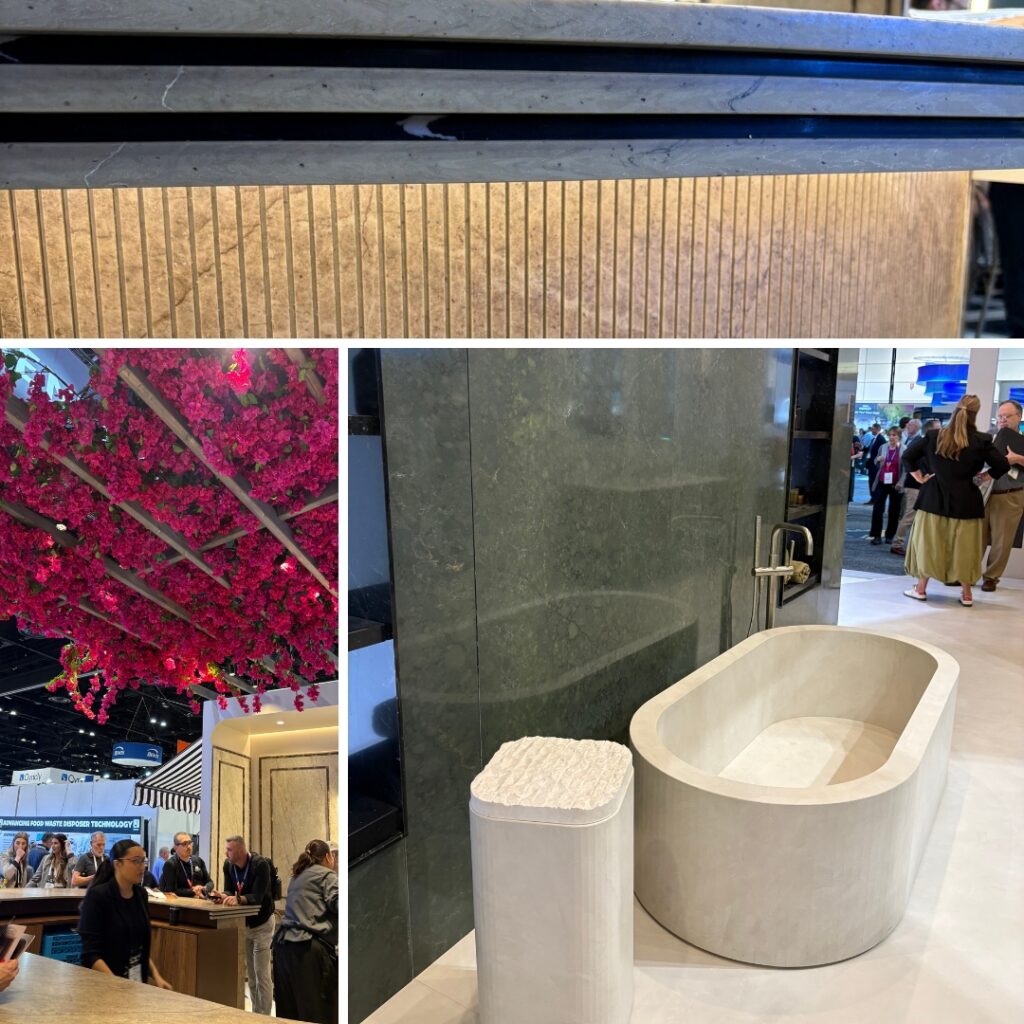
Cosentino showcased beautiful countertop and surface applications, including a striking island design with a layered edge and curved slatted base.
Their materials continue to evolve with options like:
- Silestone (low silica mineral surfaces)
- Dekton (carbon-neutral ultra-compact porcelain)
- Sensa natural stone
- Scalea stone collections
These surfaces are pushing the boundaries of durability and design flexibility.
Neolith
Neolith continues to lead the category of sintered stone surfaces, which are incredibly durable, hygienic, and versatile.
These materials can be used in kitchens, bathrooms, outdoor applications, and even architectural facades.
One of the most exciting qualities is how thin these materials can be, sometimes as little as 3 millimeters, while still maintaining exceptional strength.
New Brands We’re Watching
Beyond the major manufacturers, we also discovered several emerging brands that offer unique design opportunities.
Some of our favorites included:
Modern Matter
Decorative brass hardware accented with semi-precious gemstones that creates truly one-of-a-kind pieces.
Wonderwall Studios
Wood wall panels created from salvaged and reclaimed timber, transforming weathered materials into striking architectural surfaces.
NatureKast
Fully waterproof wood cabinetry designed for outdoor kitchens.
Danver Outdoor Cabinetry
Stainless steel cabinetry systems designed specifically for exterior applications.
Viewrail
Custom stair railing systems with integrated lighting solutions.
These discoveries are exciting because they expand the design toolkit and enable us to create more distinctive homes for our clients.
Why Shows Like KBIS Matter
Attending KBIS each year allows us to stay connected to the evolving landscape of design and construction. It helps us evaluate new materials, understand emerging technologies, and ensure that the solutions we recommend to our clients are both innovative and practical.
More importantly, it reminds us that great design is always evolving.
And while trends will come and go, the most meaningful innovations are the ones that help people live better in their homes.