A Love Letter to Kitchen Banquettes
Why I Will Almost Always Fight for the Built-In Bench
There are a few design elements that instantly make a kitchen feel warmer, more personal, and more lived in.
A kitchen banquette is one of them.
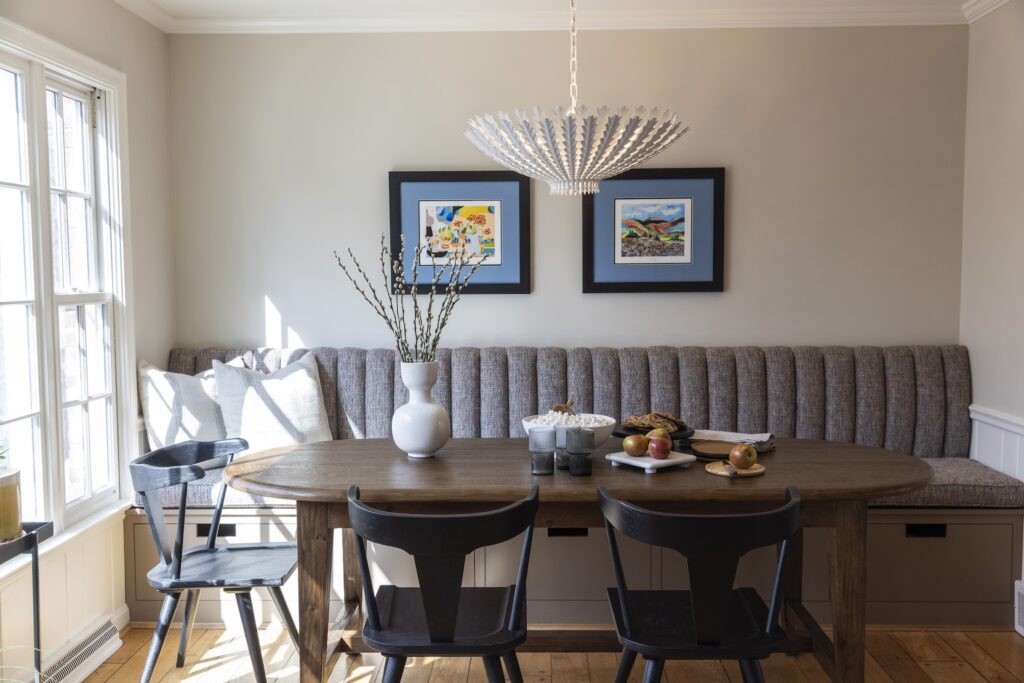
Honestly, I love them so much that I have to consciously stop myself from suggesting one in every single project. 😊
There is just something about a banquette that changes the entire feeling of a kitchen. It softens the space. It invites people to linger. It creates that cozy “everyone gathers here” energy that makes a house feel like home.
And if we’re being honest… who doesn’t love the feeling of sliding into a restaurant booth?
A well-designed banquette gives you that same cozy, tucked-in feeling while also being incredibly functional.
Why We Love Kitchen Banquettes
They Make a Kitchen Feel Less “Kitchen-y”
Kitchens can sometimes lean a little hard and sterile. Think:
- cabinetry
- countertops
- stone
- metal
- appliances
A banquette immediately softens all of that.
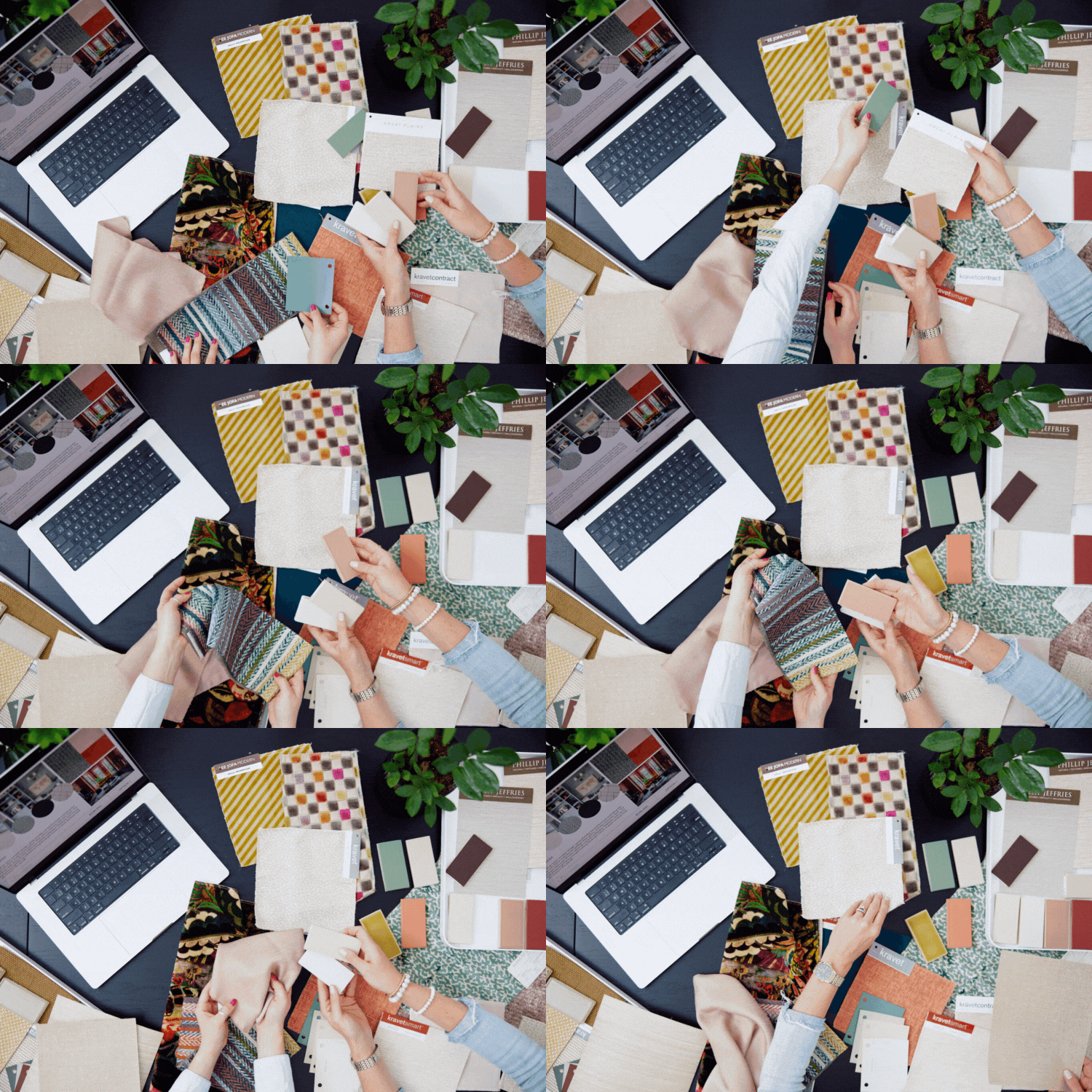
Adding upholstered seating, texture, pattern, or color brings warmth and personality into a space that can otherwise feel very utilitarian.
It starts feeling less like a workspace and more like a room people actually want to spend time in.
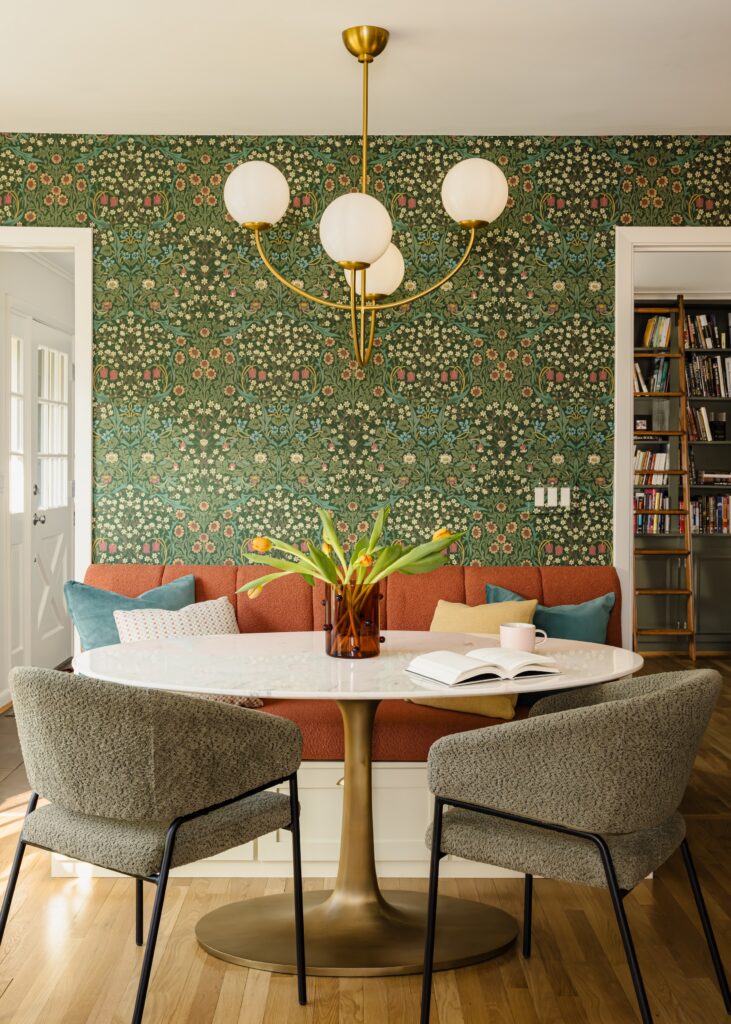
They Function Like a Second Sofa
This is one of the biggest hidden benefits.
In many homes, the kitchen has become the true gathering space. Kids do homework there. Friends sit there during parties. Someone inevitably drinks coffee there for two hours on a Saturday morning.
A banquette creates lounge-like seating within the kitchen itself. It acts almost like a second sofa for the home, especially in open concept floor plans where everyone naturally migrates toward the kitchen anyway.
And unlike dining chairs, people actually want to stay seated there for a while.
They’re Amazing for Storage
Built-in seating = hidden storage opportunities.
And honestly, we will take hidden storage anywhere we can get it. 😊
Banquettes can include:
- Lift up tops with piano hinges
- Large hidden storage compartments
- Deep drawers underneath the seating
- Storage for seasonal items, table linens, kids’ crafts, pet supplies, or small appliances
Beautiful and functional is always the goal.
Thinking About Adding a Banquette? Here Are a Few Design Tips
1. Don’t Be Afraid of Upholstery
One of the biggest concerns people have is:
“But won’t fabric get dirty?”
It absolutely can, which is why selecting the right material matters.
The good news is that performance fabrics have come a long way. We regularly use:
- faux leather
- vinyl
- indoor/outdoor fabrics
- high durability performance textiles
Many are wipeable, stain-resistant, kid-friendly, and surprisingly soft.
So yes, you can absolutely have a beautiful upholstered banquette without living in fear of spaghetti sauce.
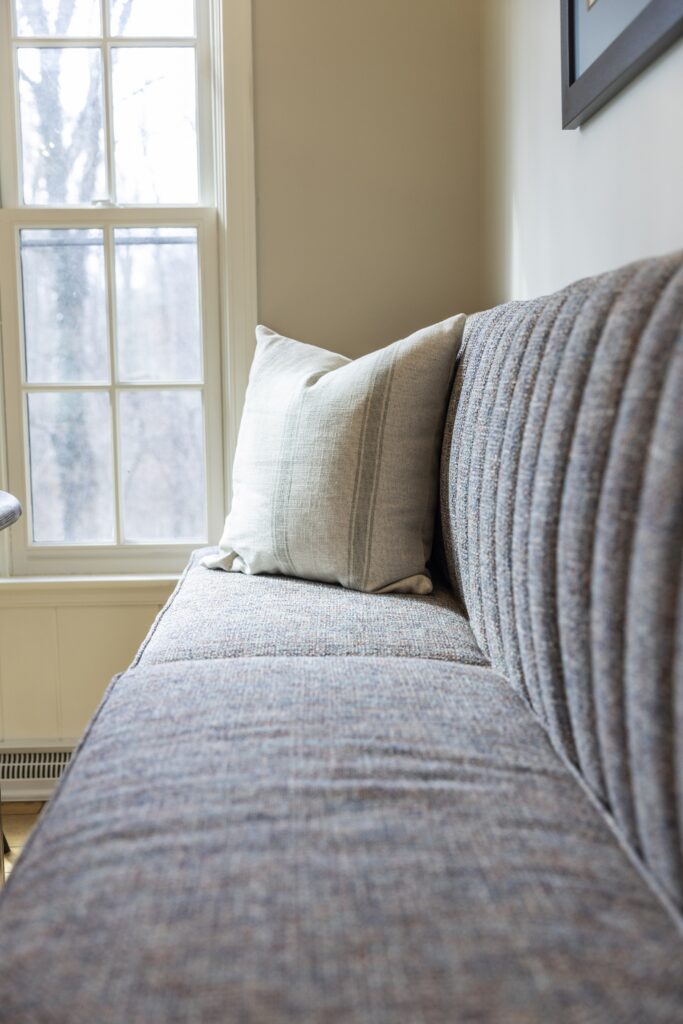
2. Depth Matters More Than You Think
This is probably the most common banquette design mistake we see.
The seat itself should typically be at least 18 inches deep. But here’s the important part: you also need to account for the thickness of the seat back.
If the back cushion is deep and plush but the seat depth was not increased to compensate, suddenly you feel like you’re perched awkwardly on the edge of a windowsill.
Comfort matters.
A properly proportioned banquette should feel supportive, relaxed, and easy to sink into.
RELATED POST: Key Measurements For Designing A Kitchen
3. Table Placement Is Everything
This is another detail people don’t realize until it’s too late.
The table should slightly overlap the banquette seat by a few inches. If it sits too far away, you’ll constantly feel like you’re reaching awkwardly toward your plate.
Too close? Suddenly, everyone sitting there is negotiating table space with their rib cage.
There is a sweet spot, and getting those measurements right makes all the difference in how comfortable the seating feels long term.
4. Plan the Lighting Last
This one surprises people.
The pendant or chandelier above the table should actually be one of the last things placed during the design process, not the first.
Why?
Because the exact positioning of the table matters first. Once the table placement is finalized, then the lighting can be perfectly centered over it.
Otherwise, you risk having lighting that is technically centered in the room… but not centered over the actual dining experience.
And trust us, your eye notices.
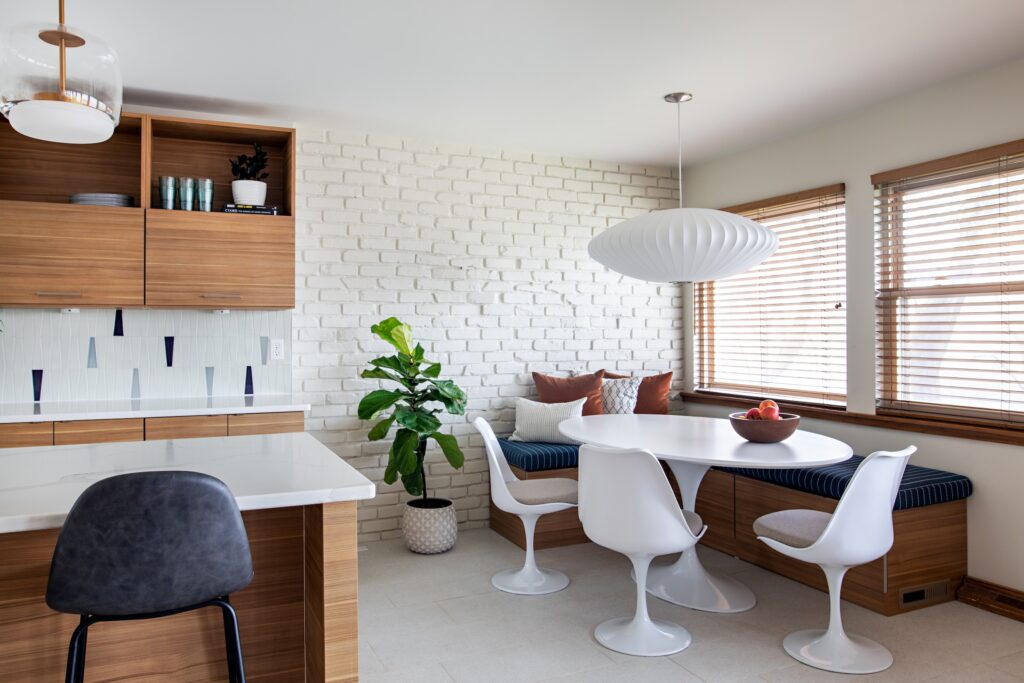
The Real Reason I Love Banquettes
At the end of the day, I think I love banquettes so much because they encourage connection.
They invite people to sit longer.
To gather closer.
To have one more cup of coffee.
To stay at the table after dinner.
They make kitchens feel layered, welcoming, and lived in instead of simply functional.
And in a world where everyone seems to be rushing somewhere, creating spaces that encourage people to slow down together feels pretty special.