Key Measurements For Designing A Kitchen That Works
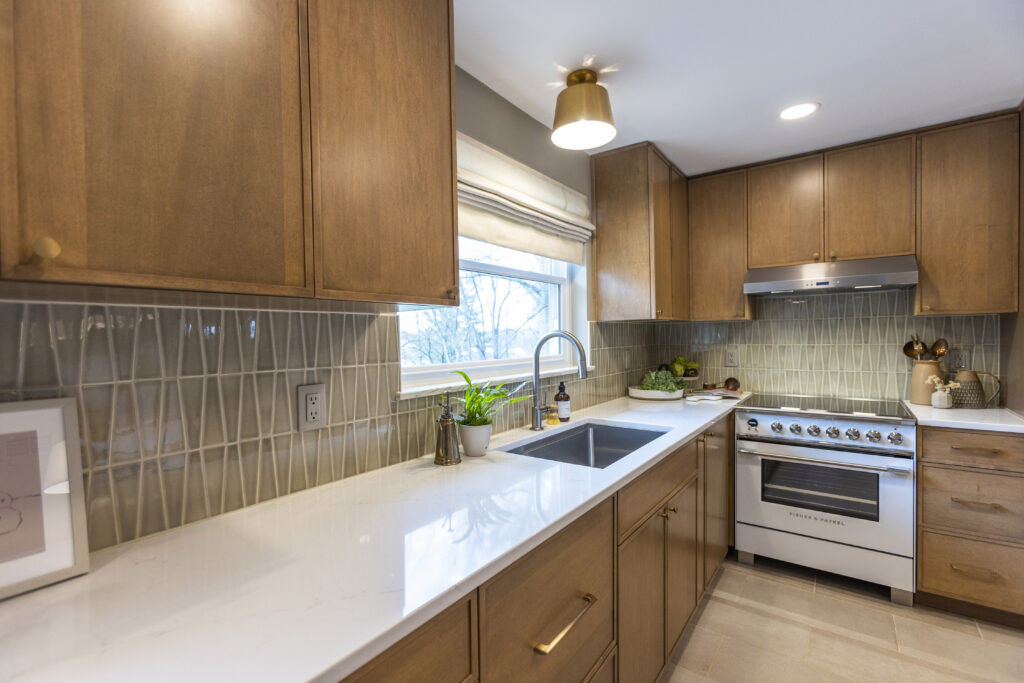
When you’ve designed as many kitchens as we have, it becomes easy to spot a poorly designed one. And I’m not talking about the aesthetics, I’m talking about how the kitchen actually functions. This is one of the most heavily used spaces in a home, working hard multiple times a day, every single day. It’s also where people naturally gather, cook, and entertain, so when the layout isn’t working well, you feel it immediately.
Great kitchen design always begins with functionality and safety. Before focusing on finishes, fixtures, or style, the layout and flow need to support how the space will be used while also keeping people safe as they move through it.
Below are some of the key measurements I review with every client before a kitchen design is finalized. These details may seem small, but they make a significant difference in how a kitchen operates day-to-day.
Key Kitchen Measurement #1: Clearance Around Islands and Counters
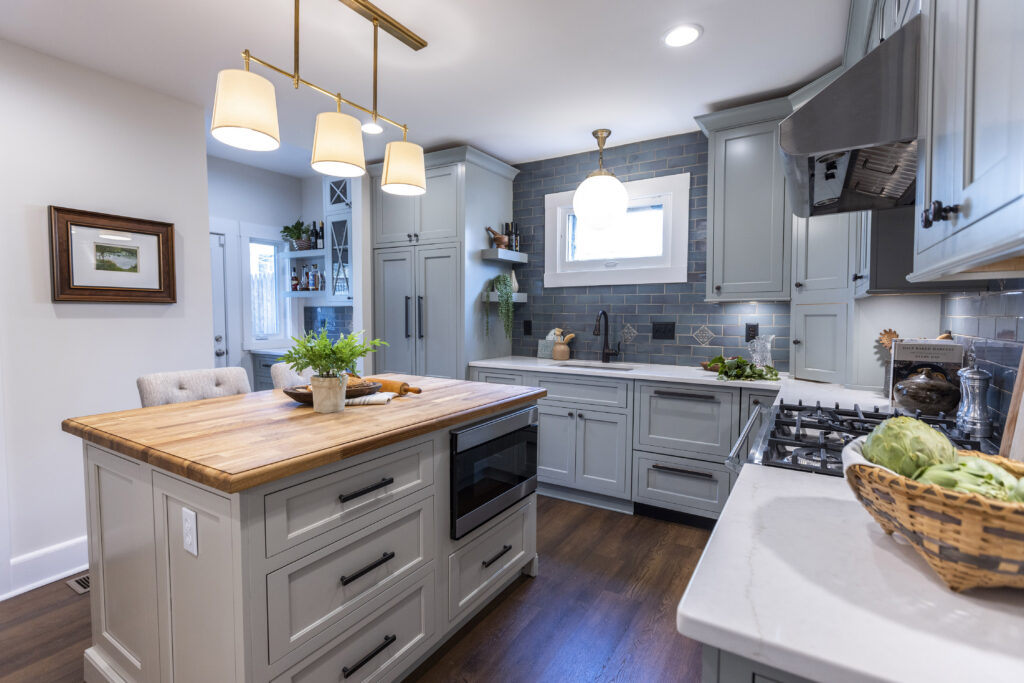
Clearance is the foundation of a functional kitchen. This space determines how comfortably and safely you can move, cook, and gather without feeling crowded.
- Minimal clearance: 36 inches
- Ideal clearance: 42-48 inches
While 36 inches technically works, I typically recommend more, especially in kitchens where multiple people cook, kids do homework, or guests congregate. Wider clearances also allow appliances like dishwashers and ovens to open without blocking walkways, which is crucial in busy households.
Key Kitchen Measurement #2: Island Size and Seating
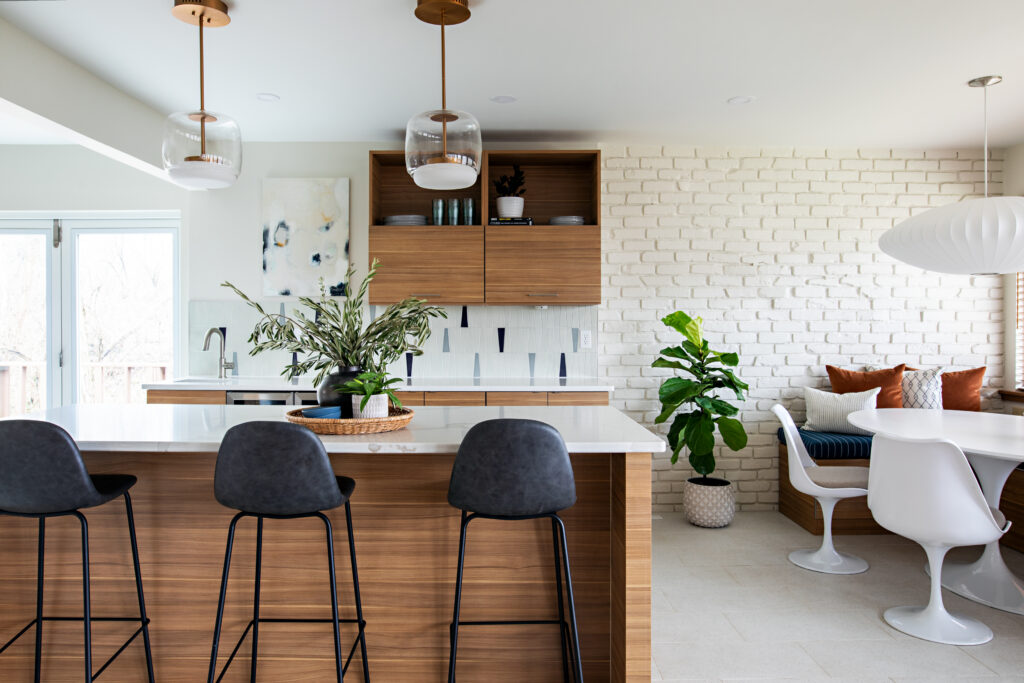
Islands tend to become the heart of the kitchen, so they need to be sized intentionally.
- Minimum island: If space is tight, 4 feet long x 2 feet deep
- Ideal island: To provide enough space for prep work, storage, and seating, length 6–8 feet, width 3–4 feet.
- Seating: For comfort, allow 24 inches of width per person and about 15 inches of knee clearance depth.
I also remind clients that an island should still leave enough circulation space around it — oversizing an island is one of the most common design mistakes.
Key Kitchen Measurement #3: Pendant Light Location Over an Island
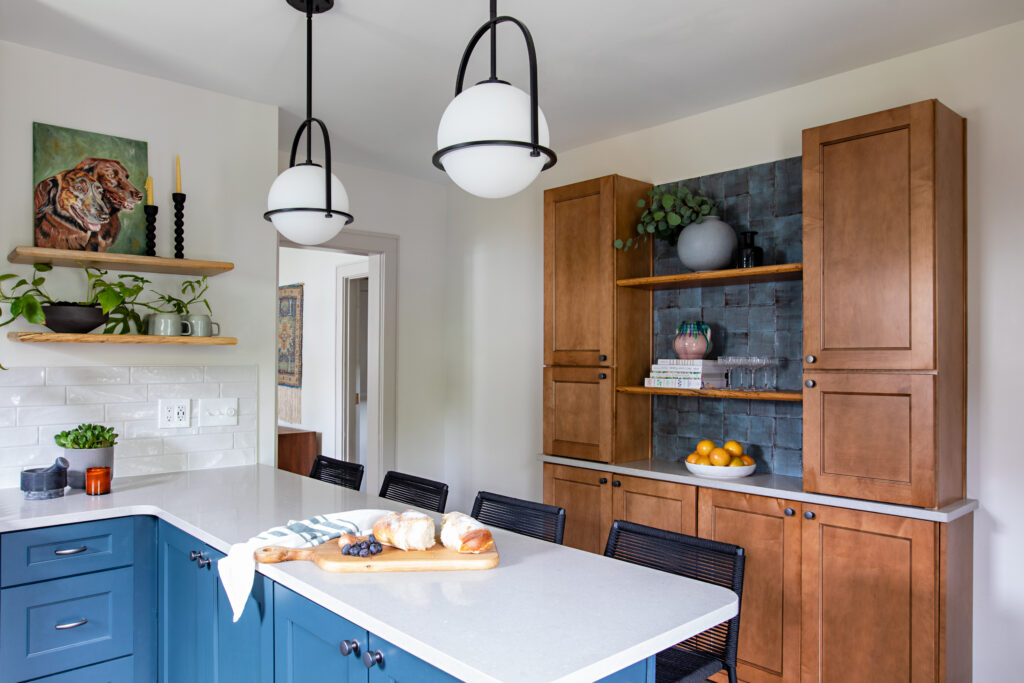
Lighting is where function and aesthetics intersect. Pendants hung incorrectly can disrupt sightlines or appear visibly heavy.
- Ideal height: Bottom of the fixture 30-36 inches above the countertop
- Ideal location: Pendants should be centered over the island, evenly spaced, and positioned to visually align with the island’s seating or main working area.
A good rule of thumb is to place pendants about 24–30 inches apart from center to center. The outer pendants should typically sit 12–18 inches in from the edge of the island to maintain balance and avoid crowding the ends.
Key Kitchen Measurement #4: Distance Between Upper and Lower Cabinets
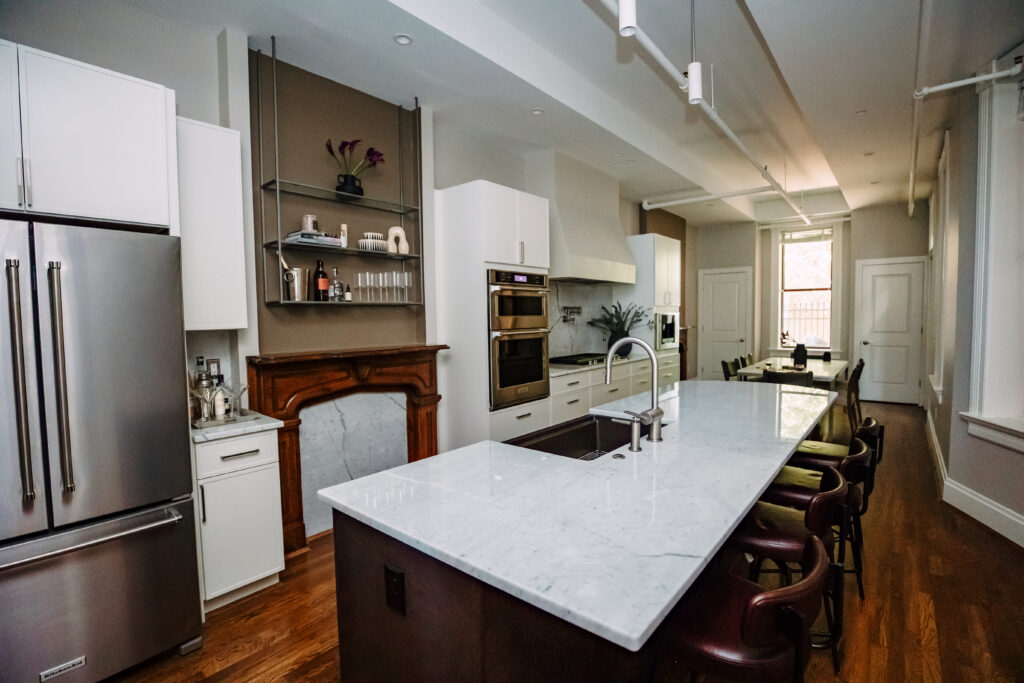
This measurement affects how usable and visually balanced your kitchen feels.
- Standard Spacing: 18 inches from countertop to upper cabinets
This height allows room for small appliances and comfortable food prep. In kitchens with taller ceilings, slightly increasing this distance (20-21”) can feel more open, but too much space can make the uppers feel disconnected and less functional.

Key Kitchen Measurement #5: The Kitchen Work Triangle
Finally, the classic kitchen work triangle still plays an important role in good kitchen design.
The three primary points of the triangle are:
- Sink
- Refrigerator
- Range
The total distance between these points should typically fall between 4 and 9 feet, keeping movement efficient without forcing you to walk excessive distances while cooking.
A well-designed kitchen should feel intuitive and comfortable from day one. Thoughtful measurements create a space that supports daily routines and grows with your household. When these details are done right, the kitchen doesn’t just look beautiful — it truly works.